

How To Draw An Involute Gear
Stride ane:
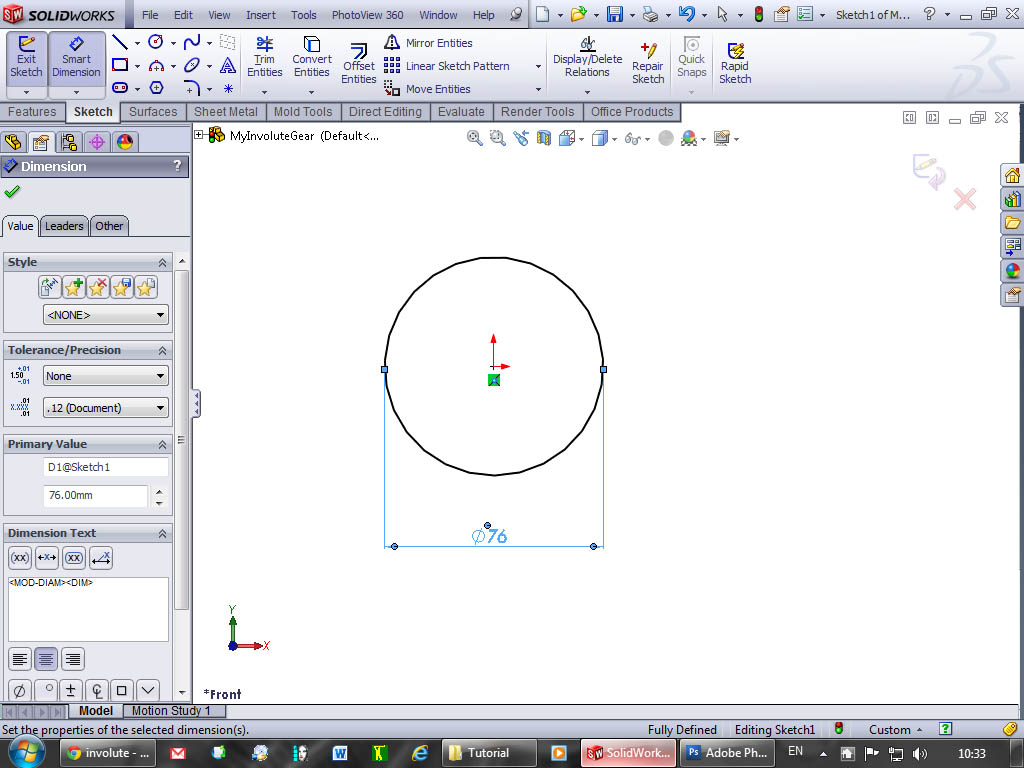
i) Make a sketch with a circle on the front plane. This represents the pitch circle that defines the center of the tooth in radial direction. Dimension it. I chose a Pitch diameter, P=76 mm, merely obviously you can cull whatever value.
Step 2:
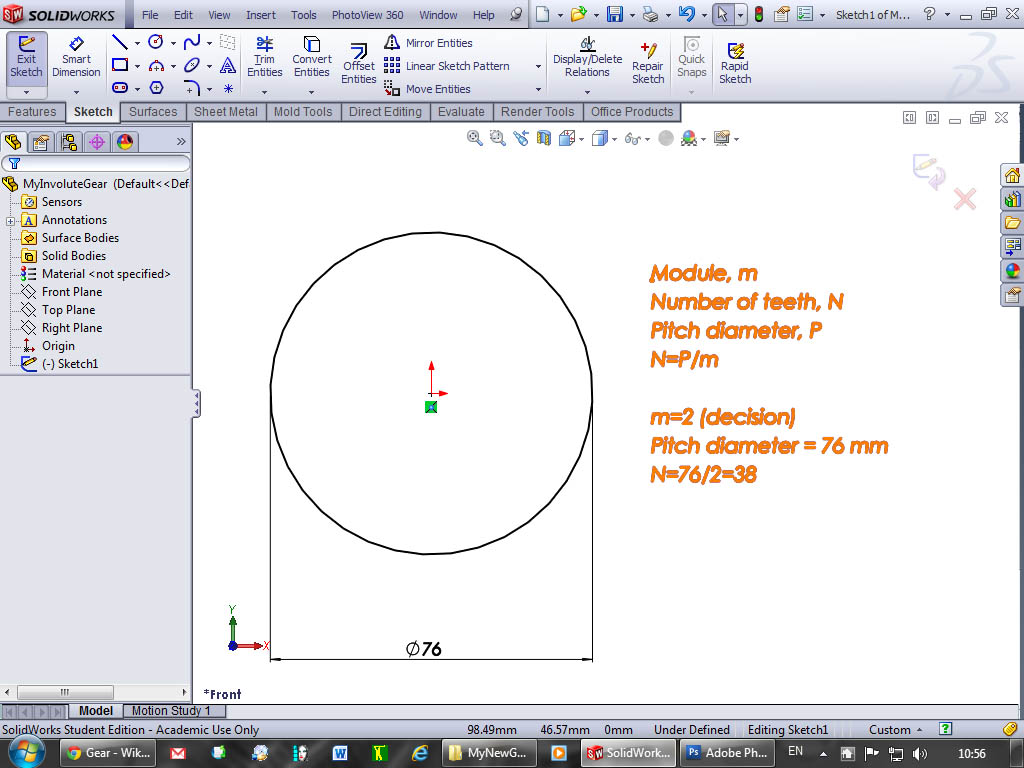
2) The module, g, expresses the size of the teeth and thus also the total number of teeth and the overall size of the gear wheel. I chose one thousand=2.
Therefore the number of teeth, North, is Northward=P/thou=76/ii=38.
Step 3:
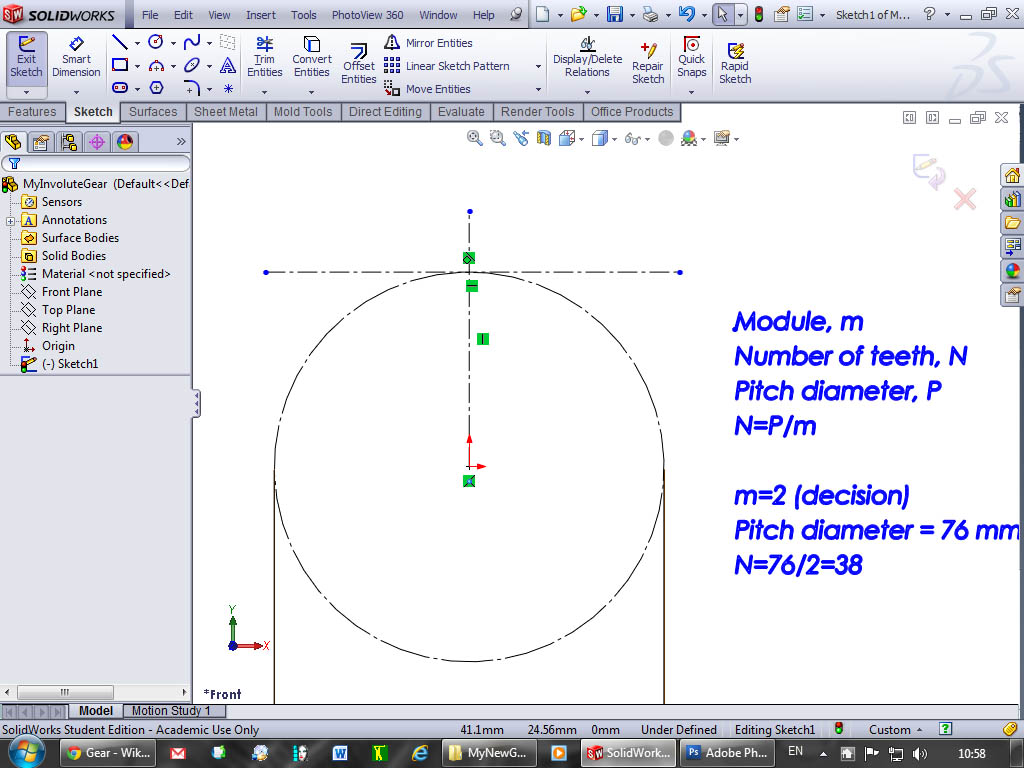
3) Draw a vertical structure line through the heart and a horizontal tangent to the circle. The lines run into in the outset point on the anfractuous curve.
Step 4:
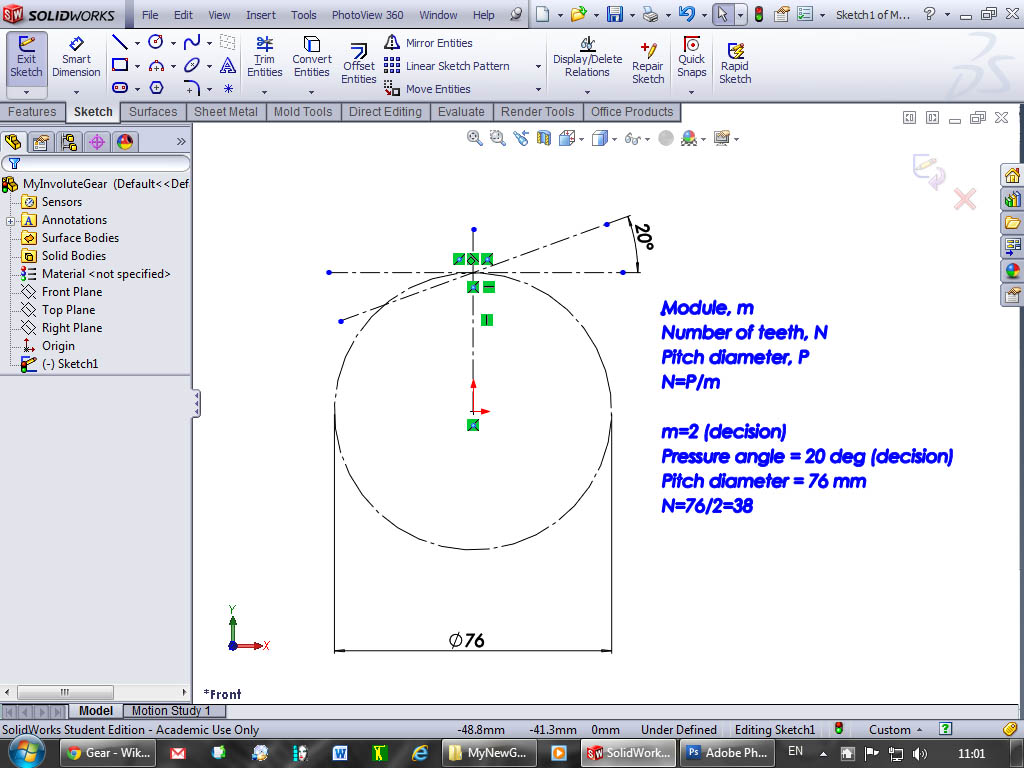
iv) Describe some other construction line through this point at an angle of 20 degrees. This angle is called the pressure angle and 20 degrees is one of the almost used standards, but it could exist something else.
Step 5:
v) Draw a perpendicular construction line to the pressure level angle line through the heart.
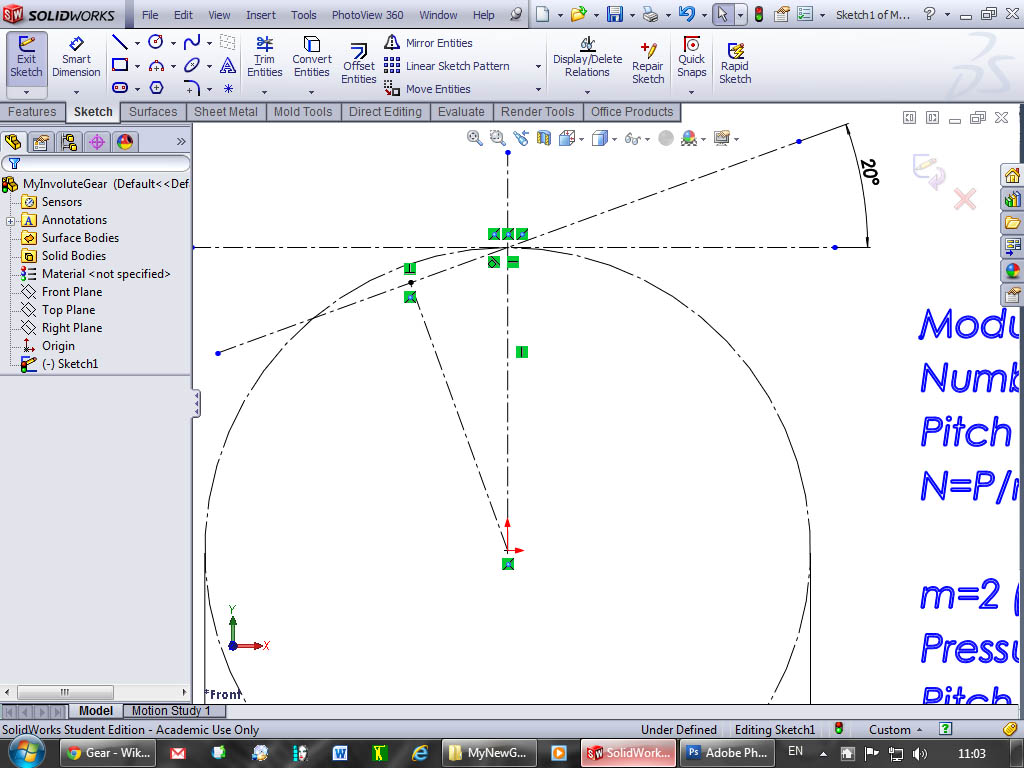
Pace 6:
half dozen) Draw a construction circle through the centre and the bespeak plant in the previous step. This circle is the base circumvolve for the involute. As you may know, an involute is the curve described past the end of a string wound around a cylinder. And the "string length" is the distance shown in the side by side step:
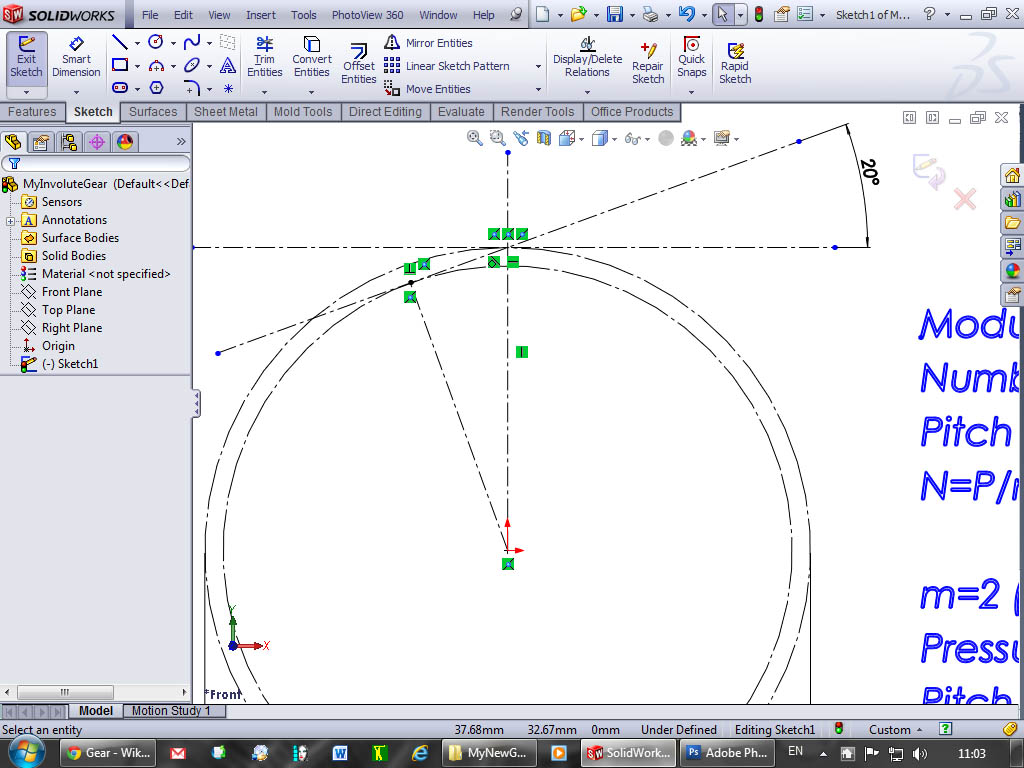
Pace 7:
7) Dimension that altitude. (You have to make information technology driven in SolidWorks because the length is fully divers by the sketch). If you modify the sketch, this measurement will update to a new value.
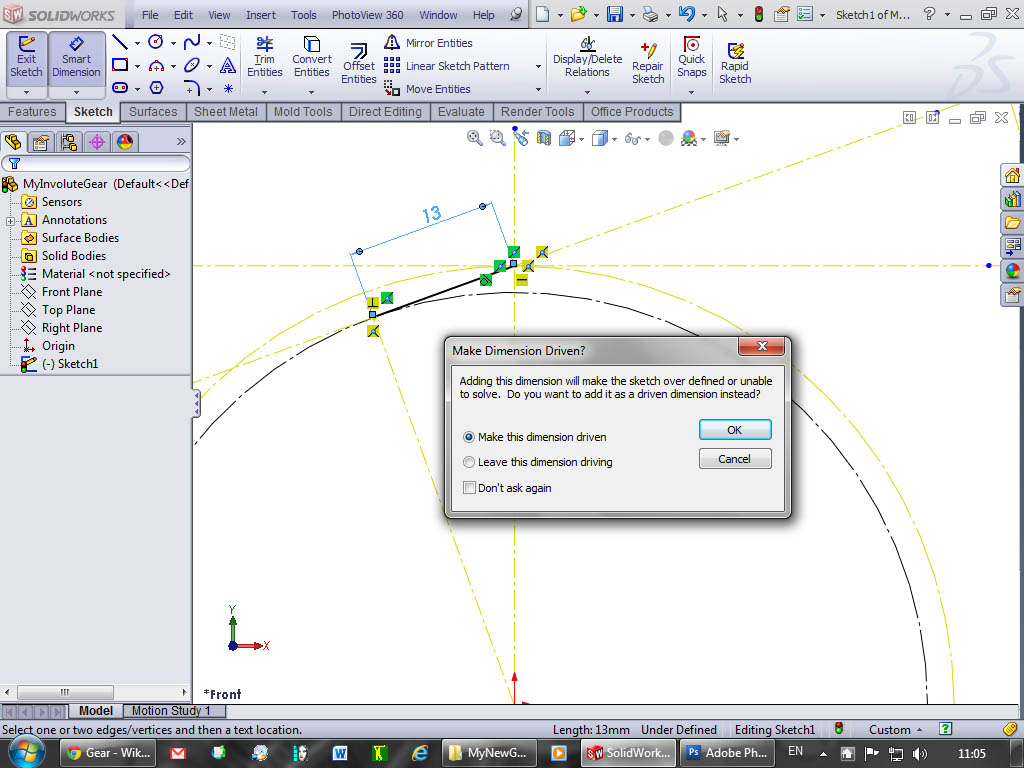
Pace eight:
8) I hibernate the sketch relations in this step to remove ataxia from the images.
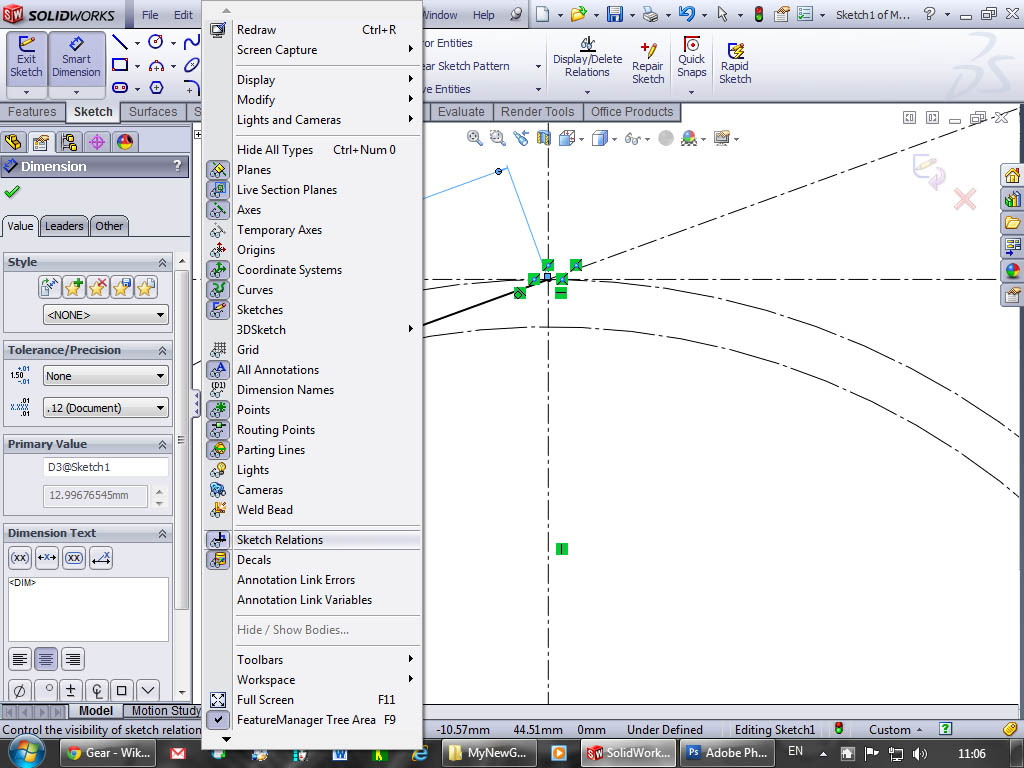
Step nine:
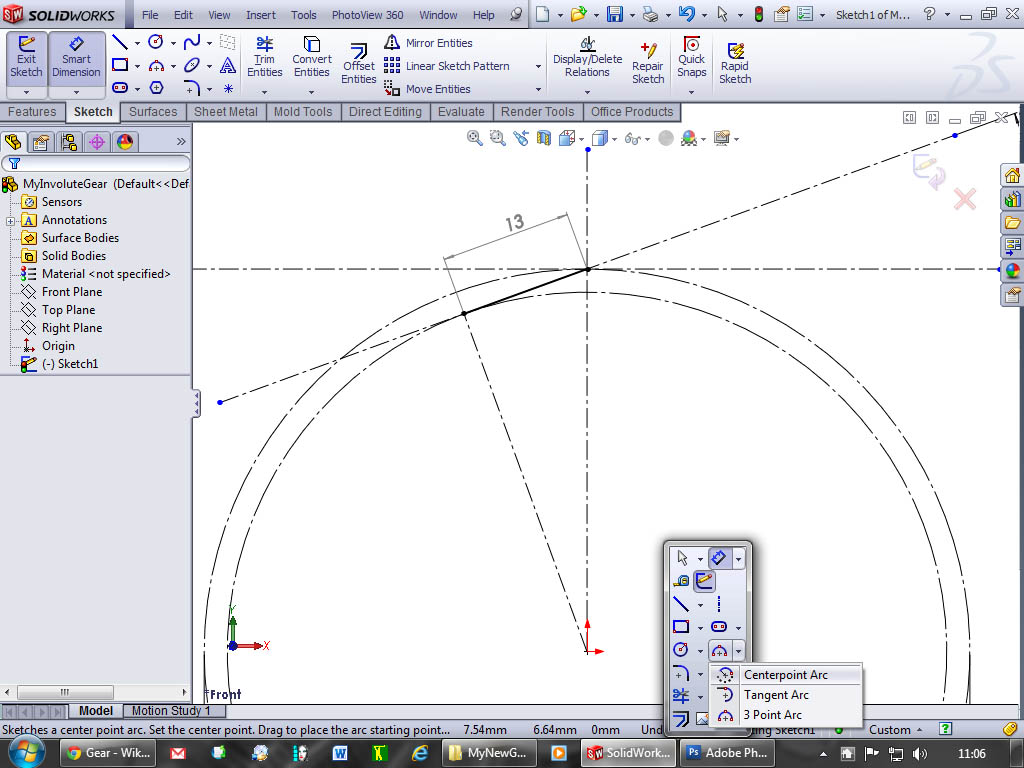
9) I will now construct the "virtual" cord when it is "unwound" a little more. Draw a centerpoint arc as indicated.
Step x:
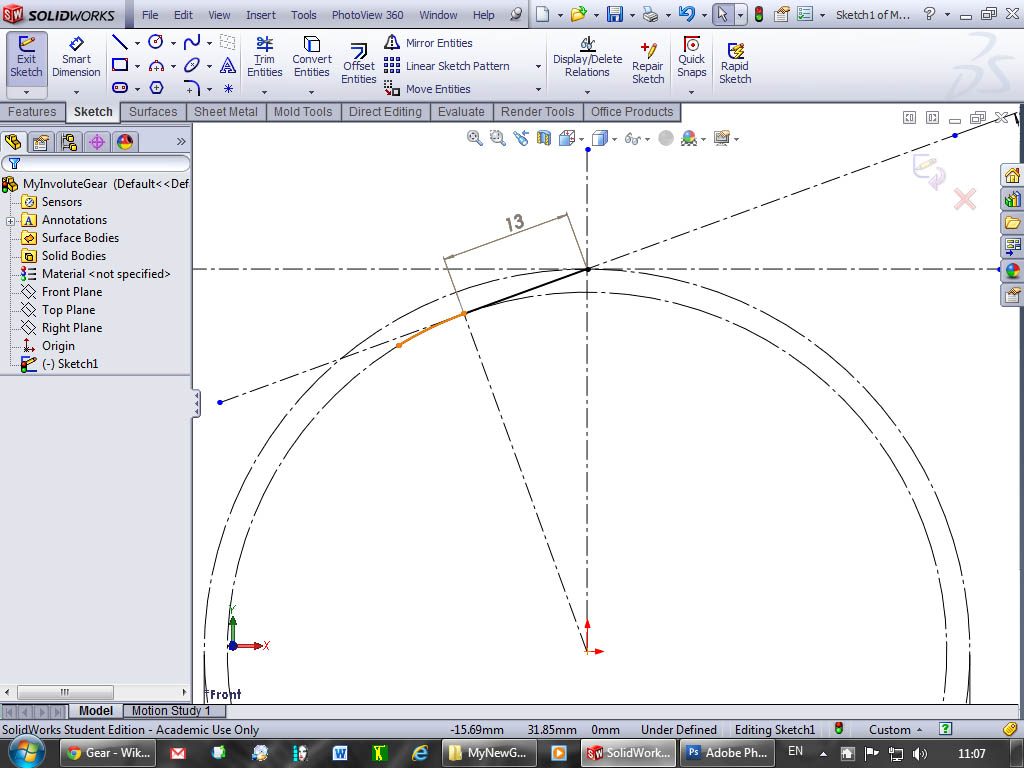
ten) Dimension it to a prissy circular number, e.g. 5. This has to exist an ARC DIMENSION. You click the two endpoints AND the arc itself, and the resulting dimension has a picayune arc over the number, showing that the dimension is measured through the arc instead of linearly.
Step xi:
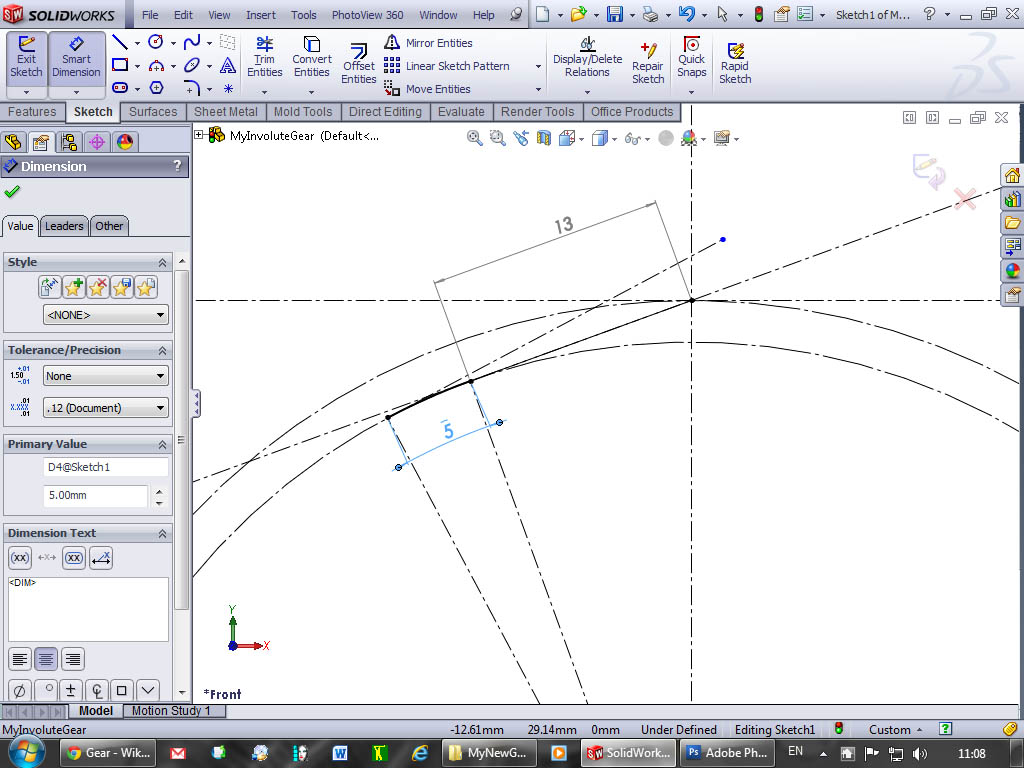
xi) Now depict the radius and tangent through this new end point and dimension it.
Stride 12:
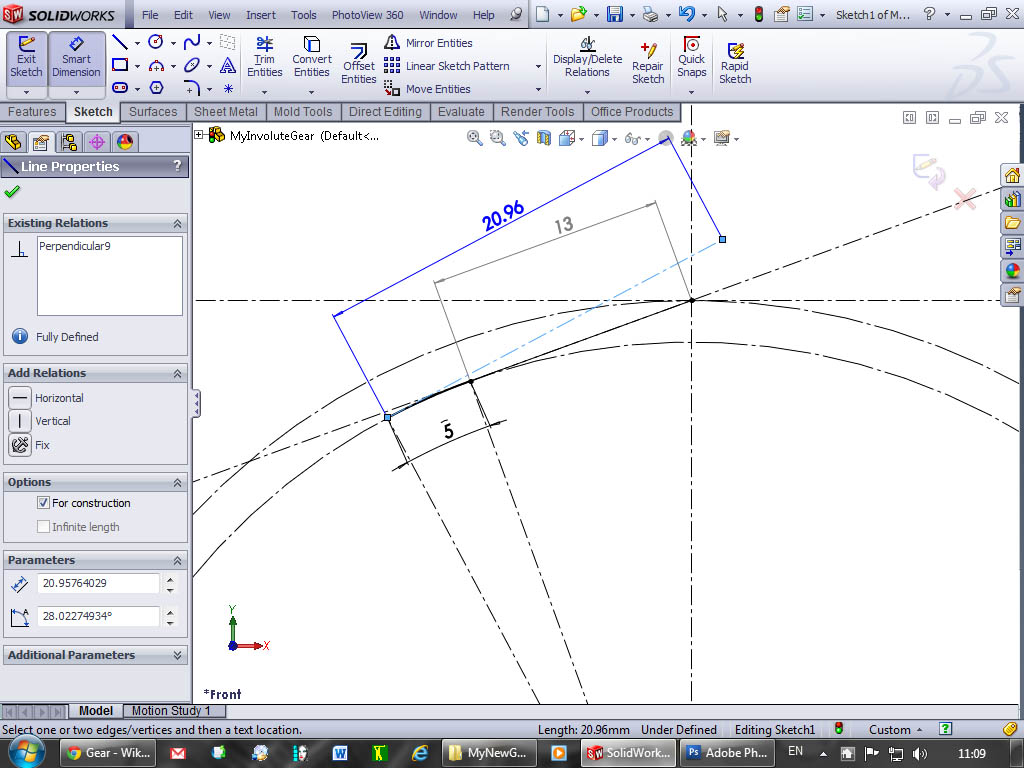
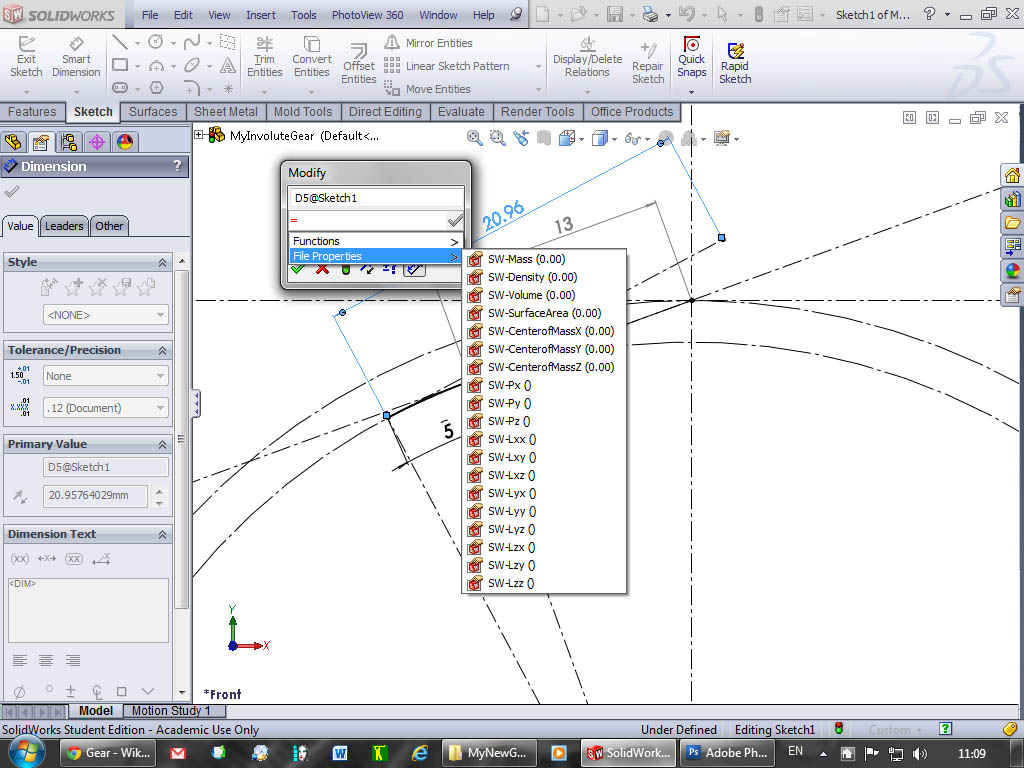
12) Press = when the dimension alter box is open to define an equation.
Step xiii:
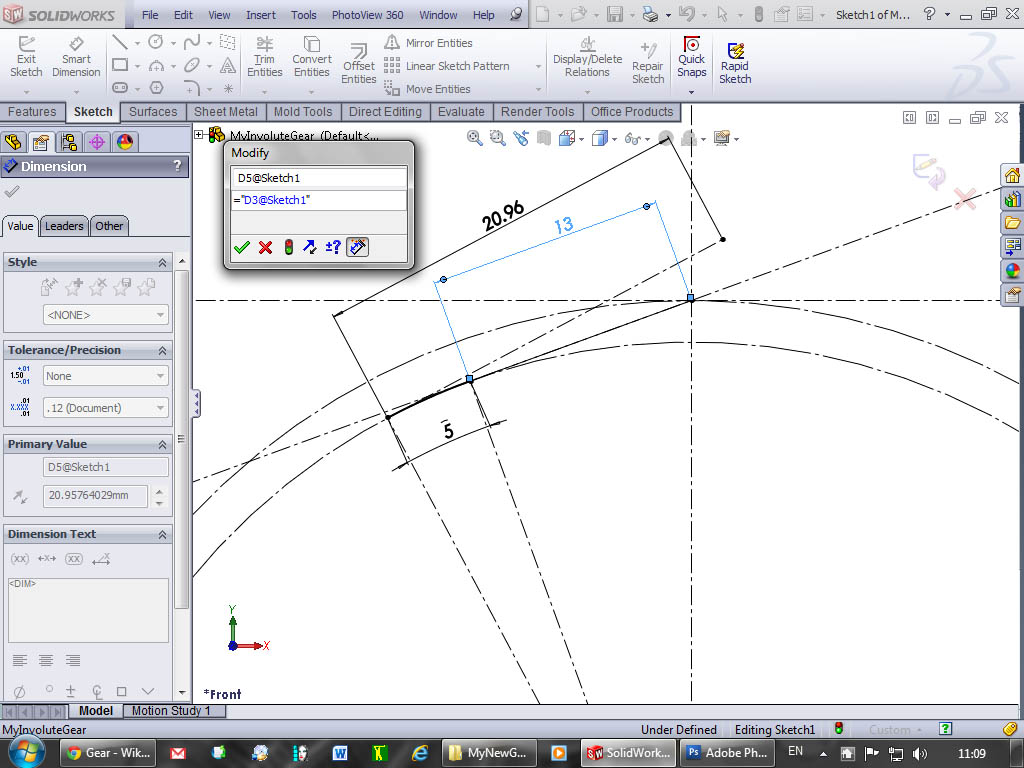
13) Click the dimension for the first part of the string (length 13 mm in my drawing). This enters the value into the equation automatically.
Step 14:
14) Click +
Footstep 15:
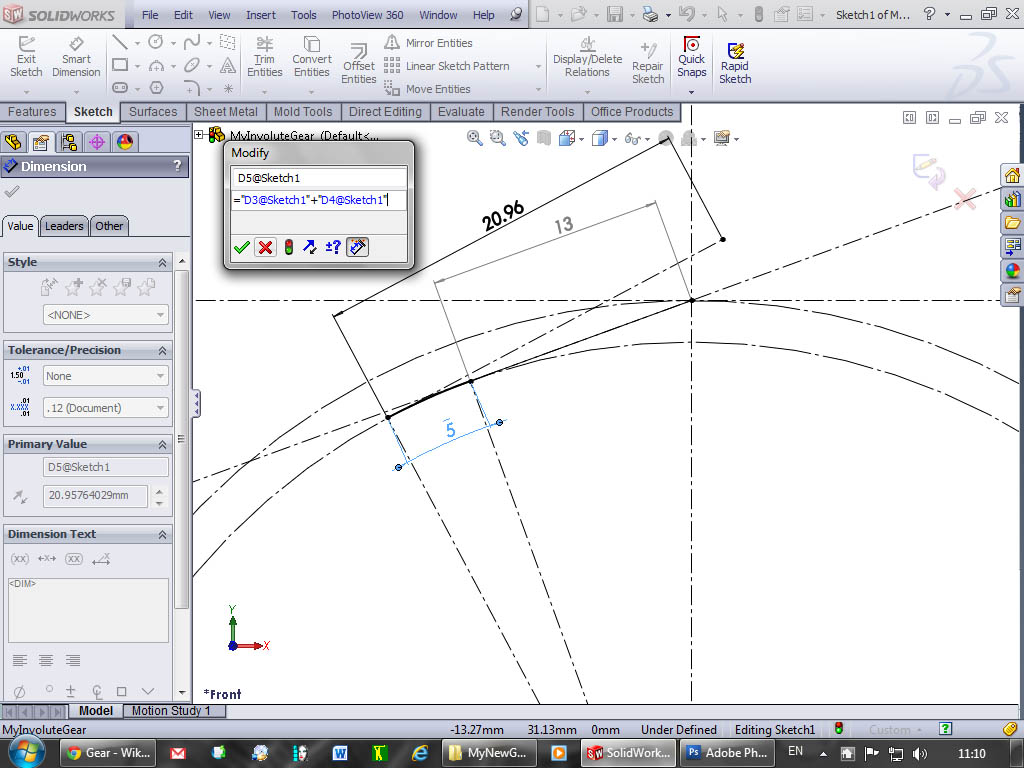
15) Click the dimension of the "new piece of string" (length 5 in my drawing).
Step 16:
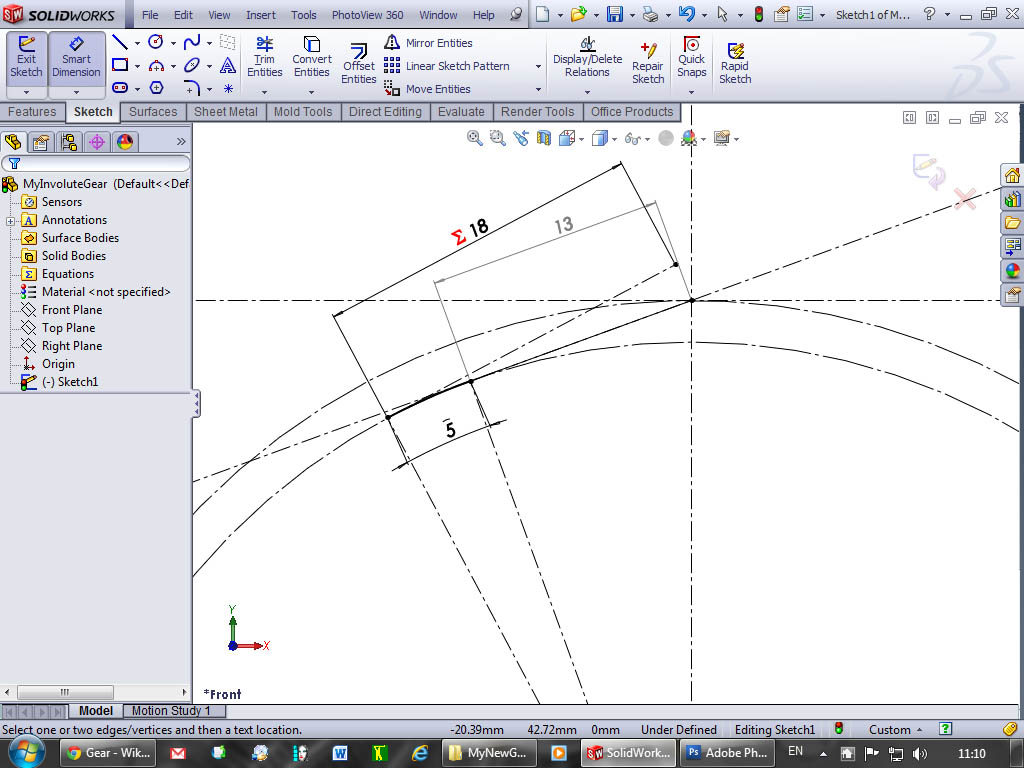
xvi) Click the green bank check mark in the dialog box. You'll see that the new length is calculated from the existing dimensions (length eighteen mm in my drawing). The endpoint is another point on the anfractuous; and past changing the value of the arc, you tin go ALL POINTS on the elevation half of the involute through this "graphic calculator".
Footstep 17:
17) Practise a similar construction with an arc going the contrary direction to obtain an additional point on the involute.
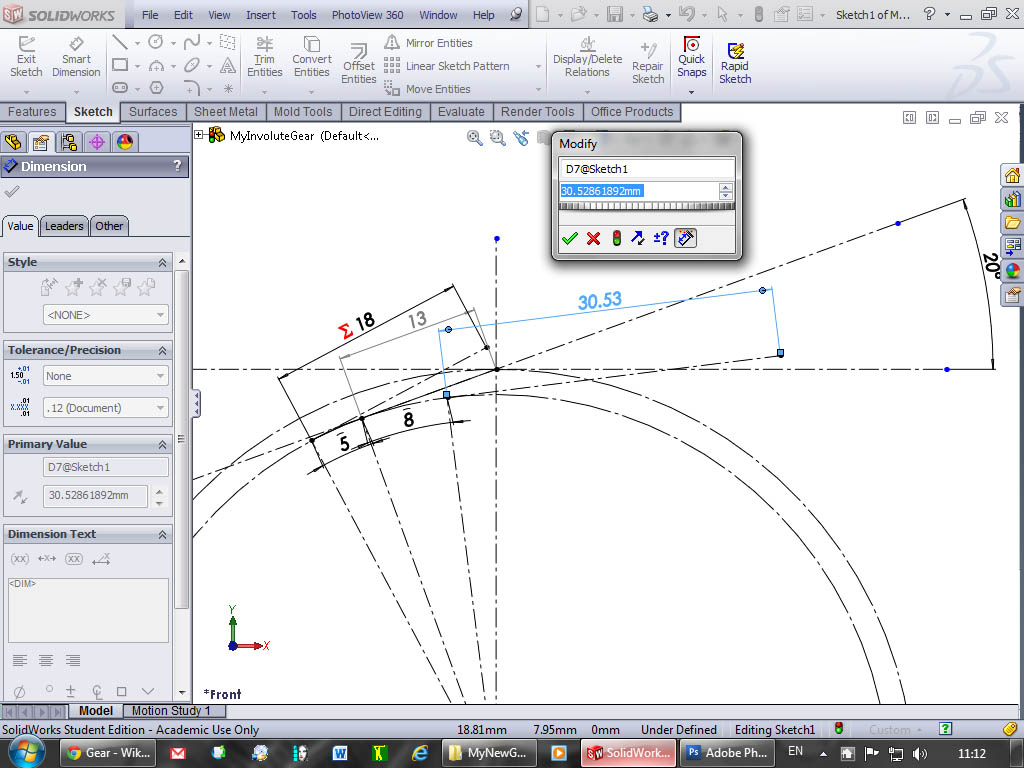
Pace eighteen:
18) This time you decrease the arc length from the original value. You lot can also describe a betoken offset the initial value (13) along the base circumvolve to get the lowermost point on the anfractuous.
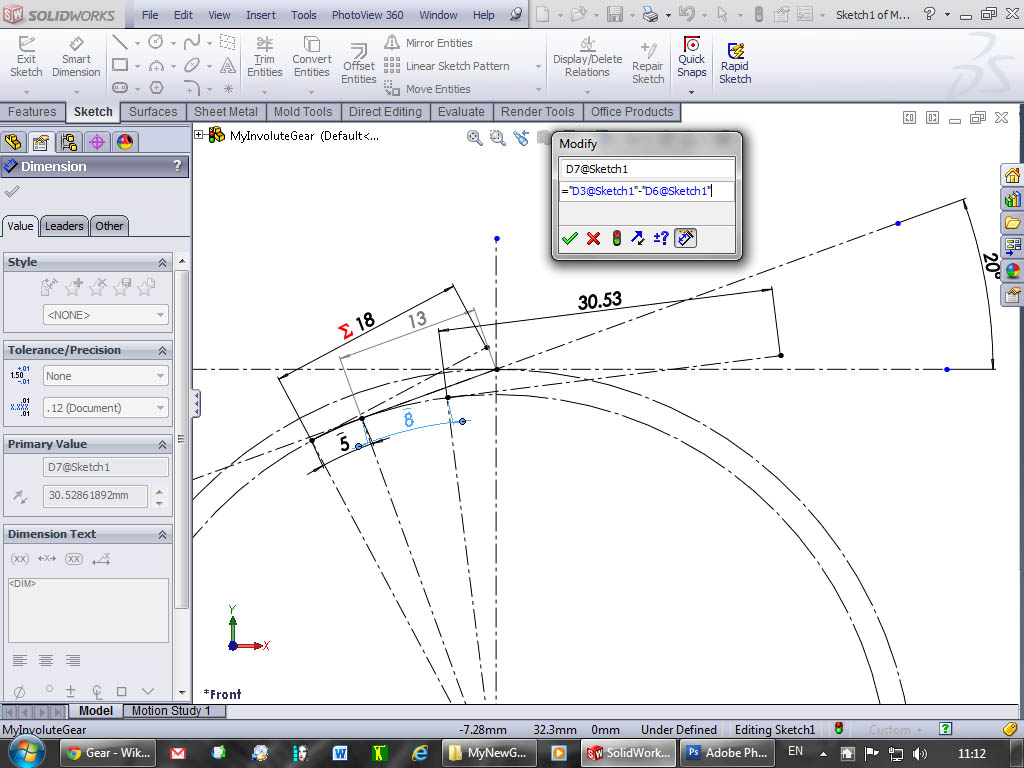
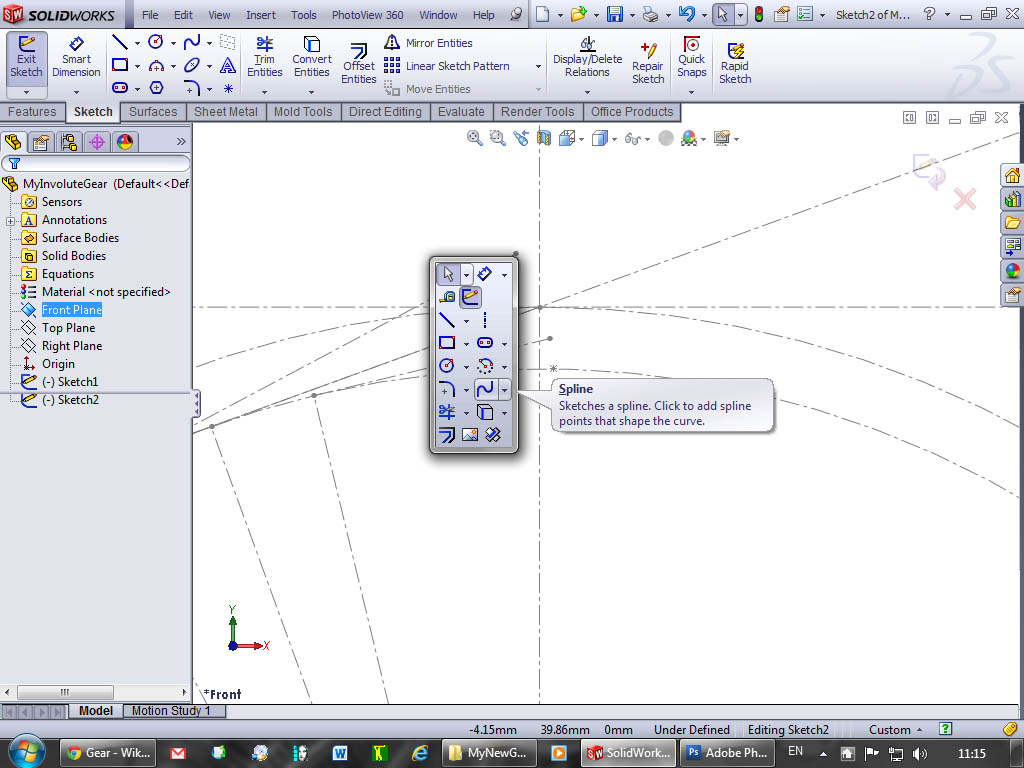
Pace 19:
19) You tin can now depict the involute IN A NEW SKATCH using the constructed points.
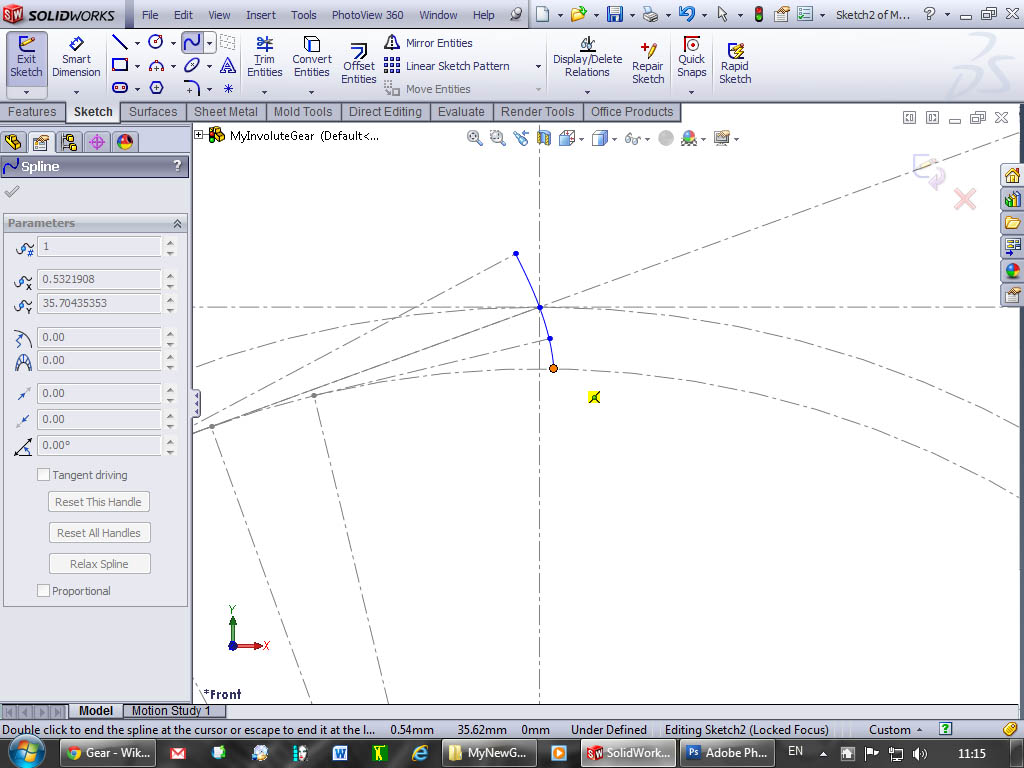
Step twenty:
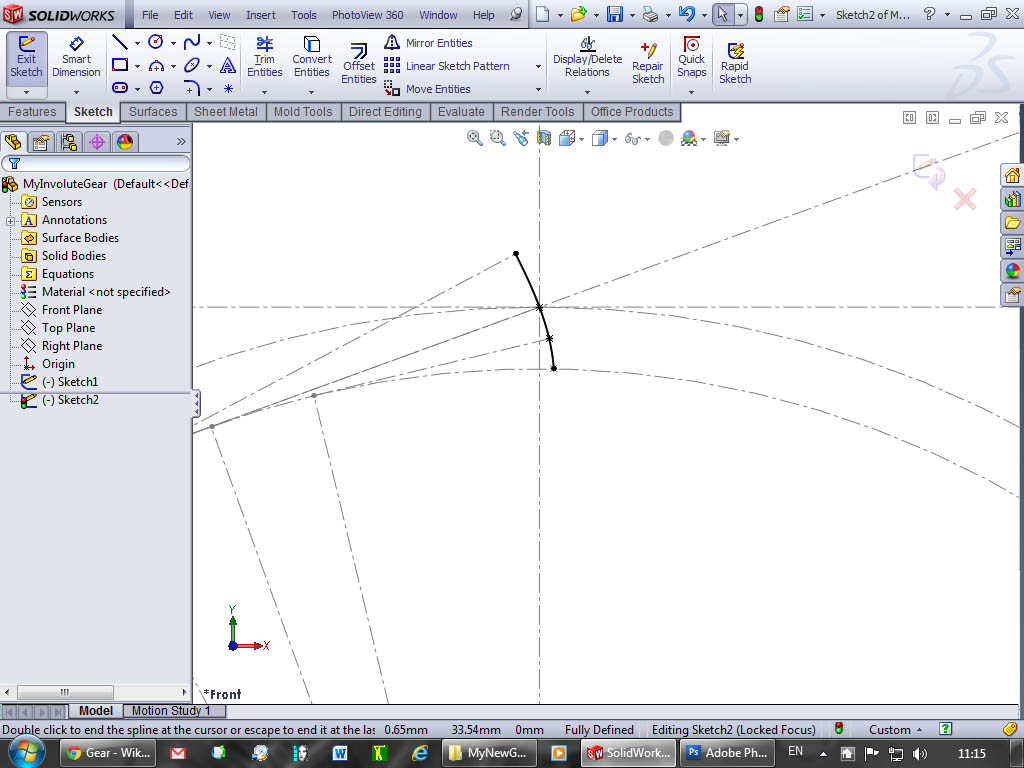
twenty) Use the spline tool to depict a spline through the three or 4 constructed points.
Stride 21:
21) Press ESC to end.
Pace 22:
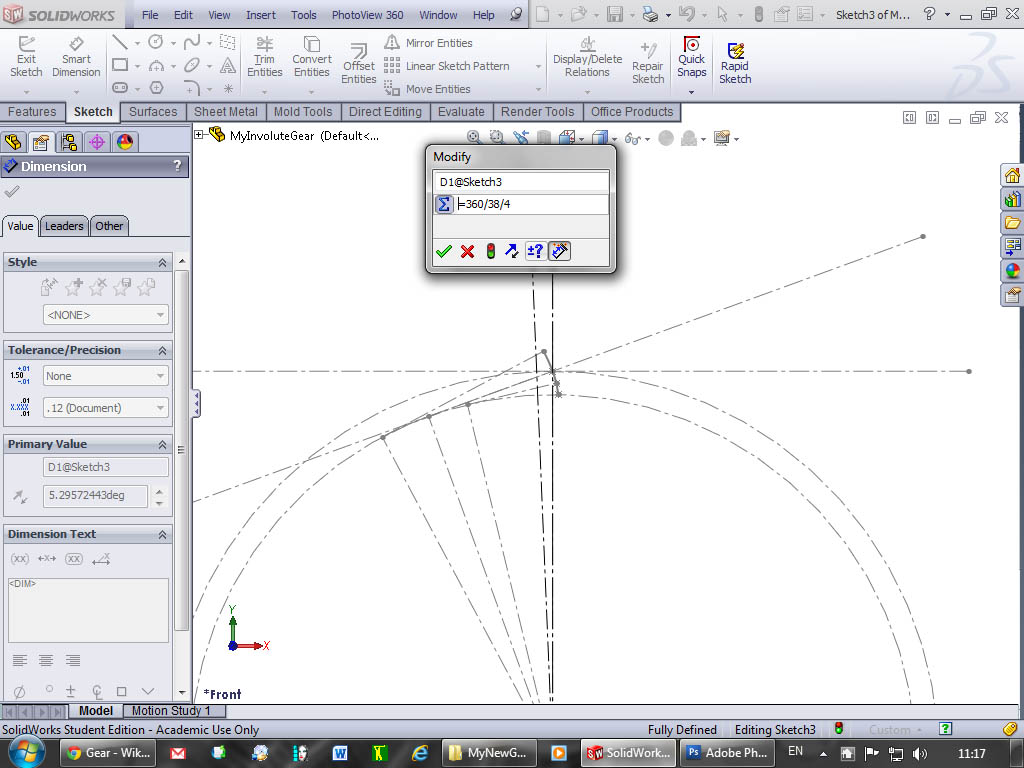
22) Draw a construction line that represents the middle of the gear cog. It is offset ¼ of the angle for one cog. You can practice the calculations by punching in the numbers straight into the "Modify Dimension" box as "=360/38/4".
Step 23:
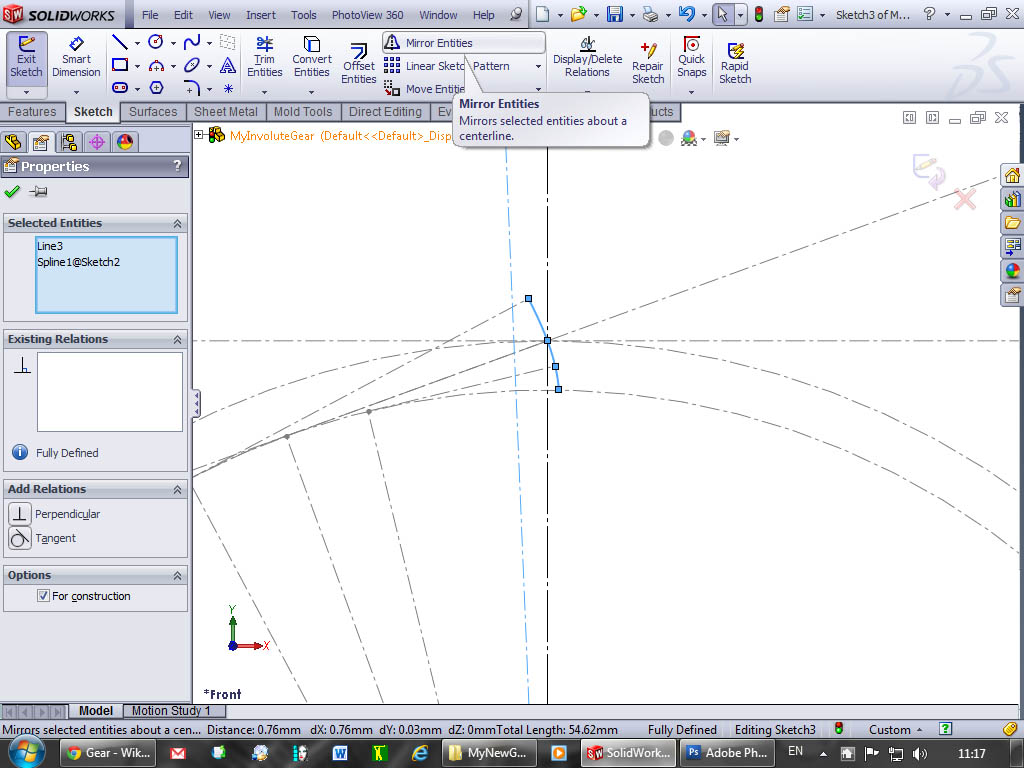
23) Mirror the anfractuous past ctrl-clicking the spline and the centreline and choosing "Mirror Entities".
Pace 24:
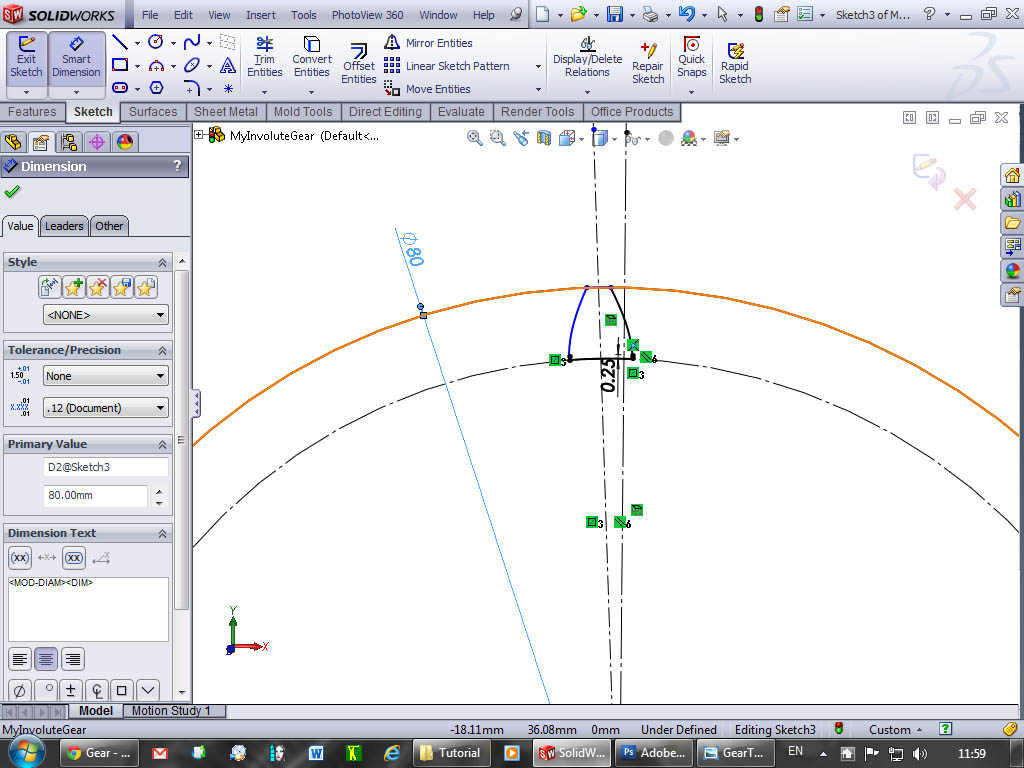
24) At this stage we need to describe the circle that defines the outer size of the gear. The diameter is divers by P+2*m = 76 mm + ii*two mm = 80 mm.
Step 25:
25) When you look closely, you see that the involute is a tiny scrap too short to accomplish the outer contour. This needs to exist fixed.
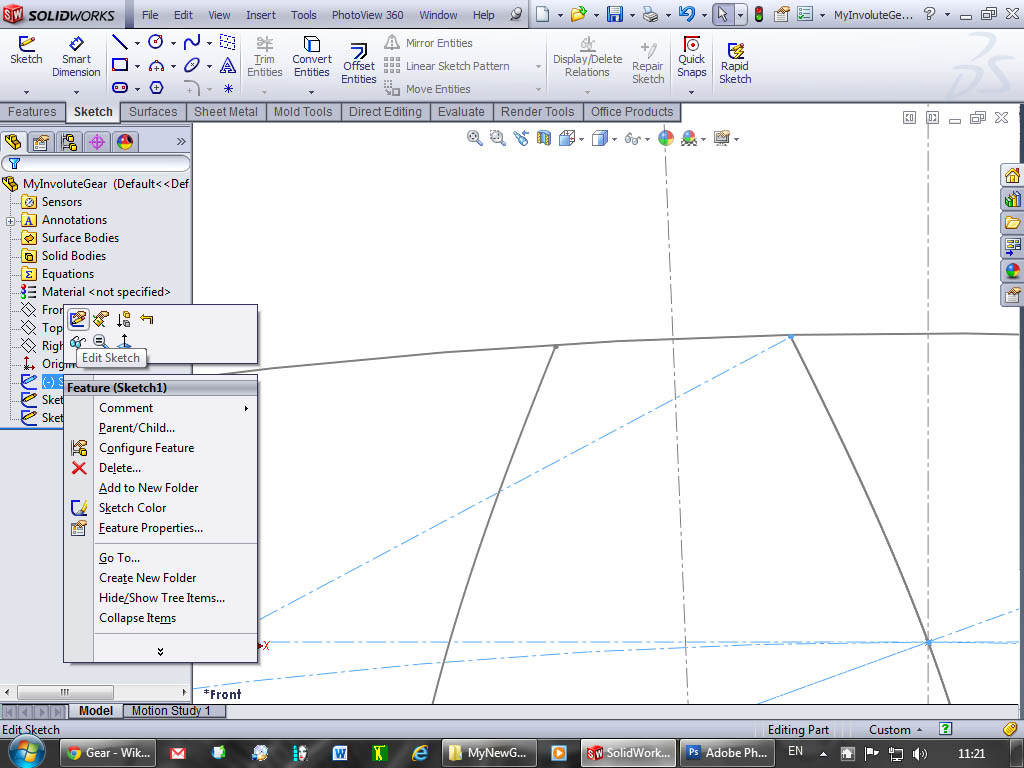
Stride 26:
26) Go back to the first sketch and right-click it to edit. Increase the length of the arc from five mm to say v.5 mm. Due to the parametric nature of the software, everything updates without y'all having to practise annihilation else.
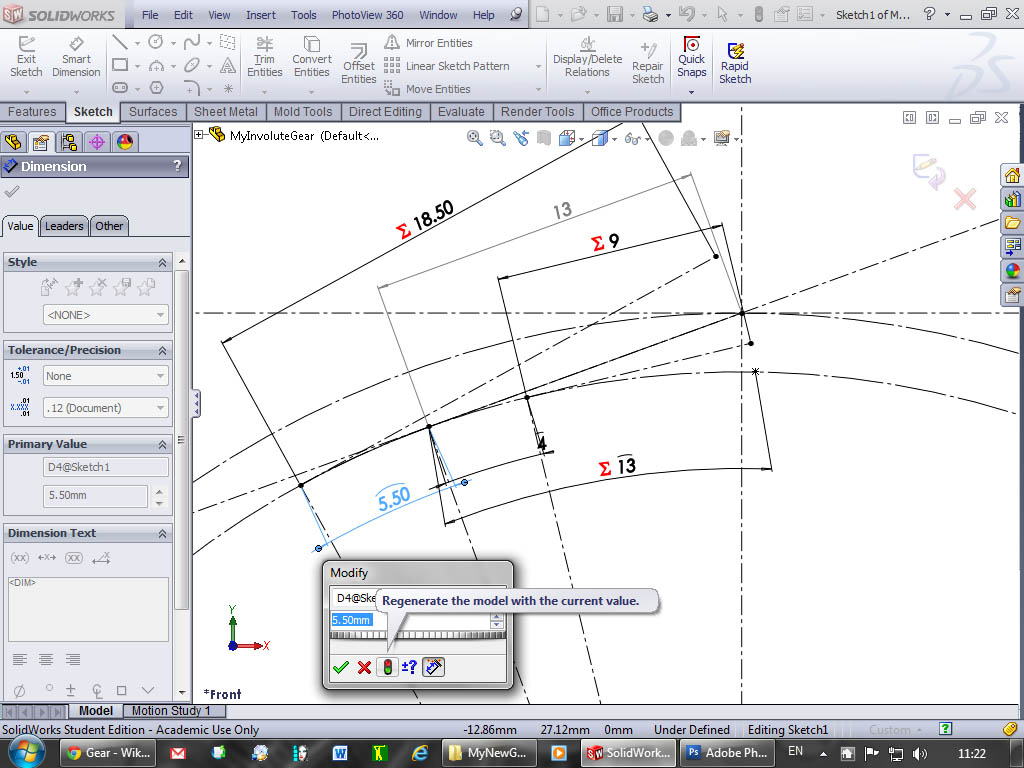
Stride 27:
27) Return to the nowadays sketch and verify that the involutes at present extend beyond the outer diameter.
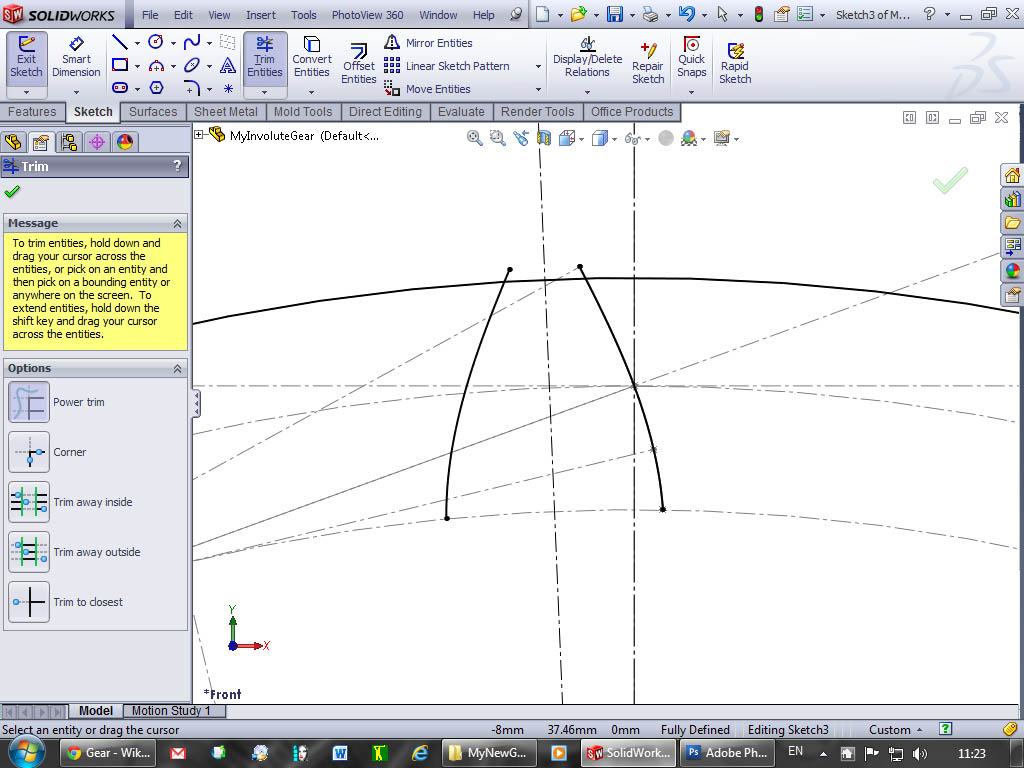
Pace 28:
28) Apply Power trim to cutting off excess parts of the involutes.
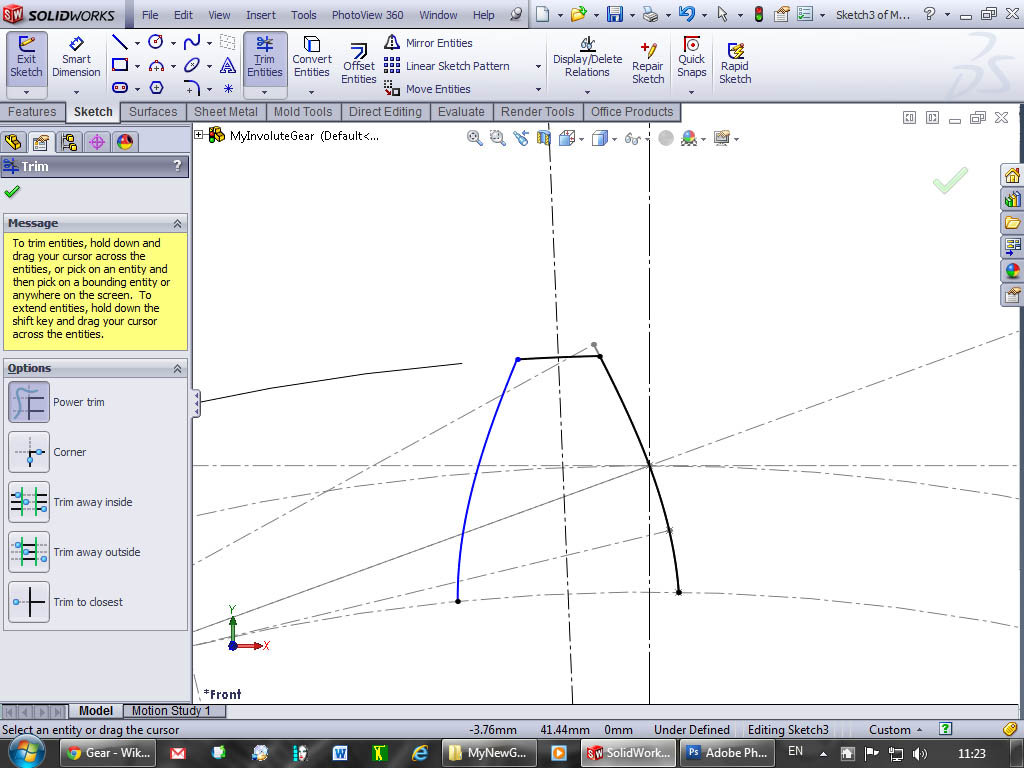
Step 29:
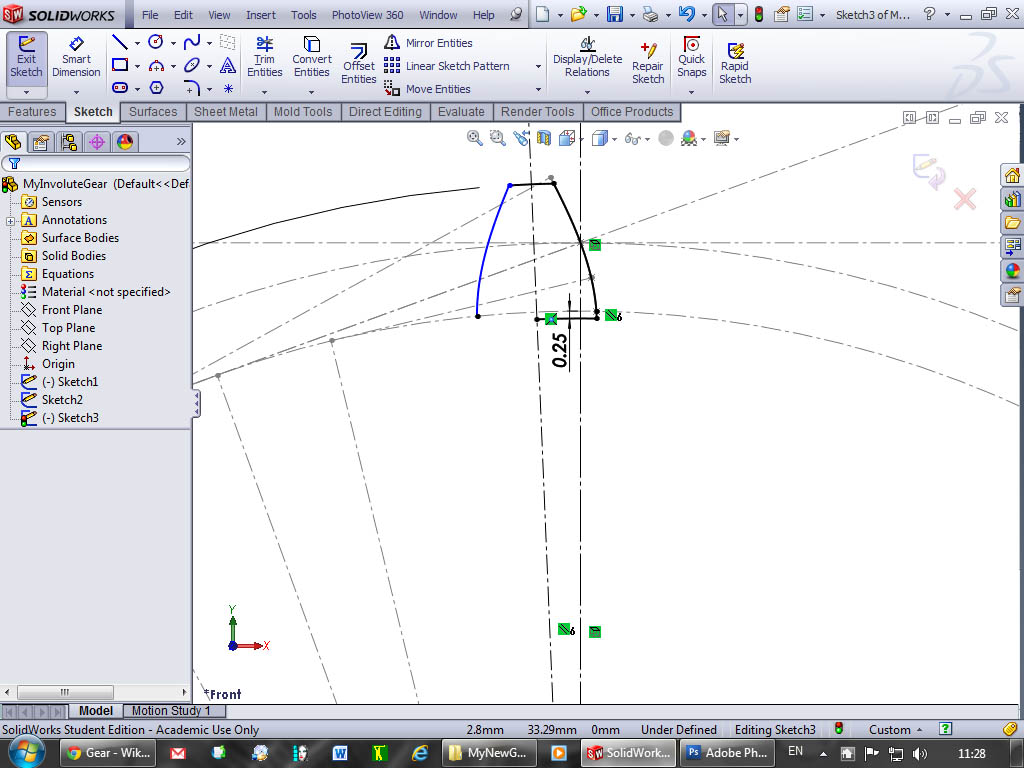
29) We need to add a minor clearance for the teeth inside the involute diameter. Extend the tooth downwards with lines parallel to the normal construction line.
Pace thirty:
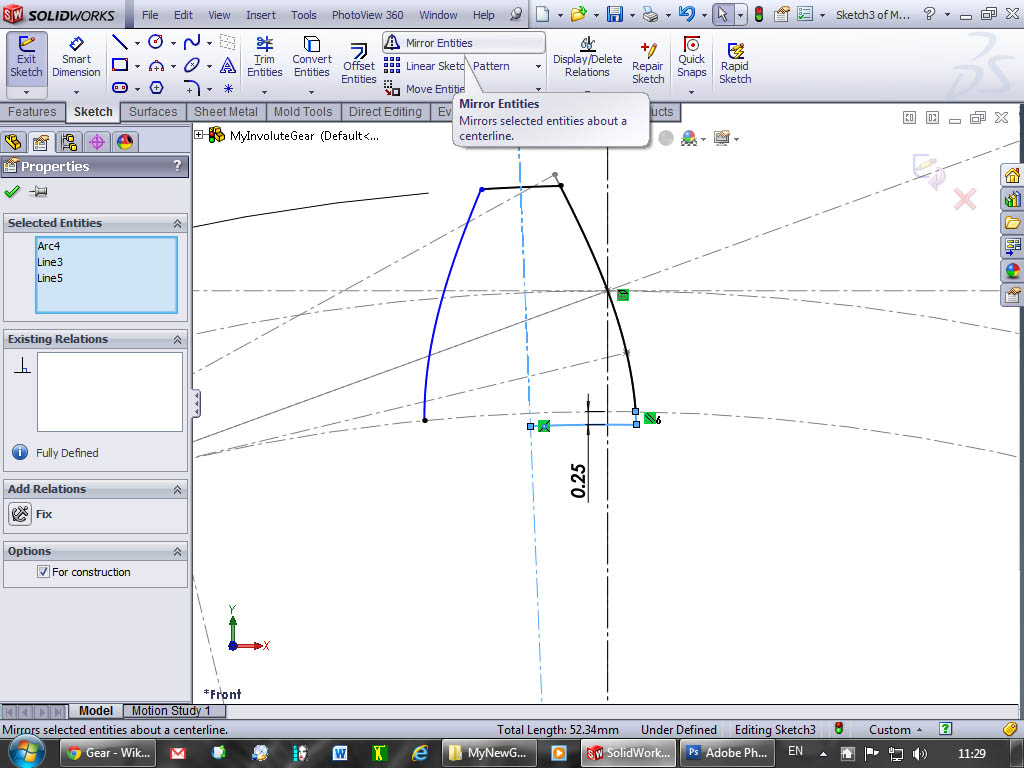
30) I chose a .25 mm extension/clearance.
Step 31:
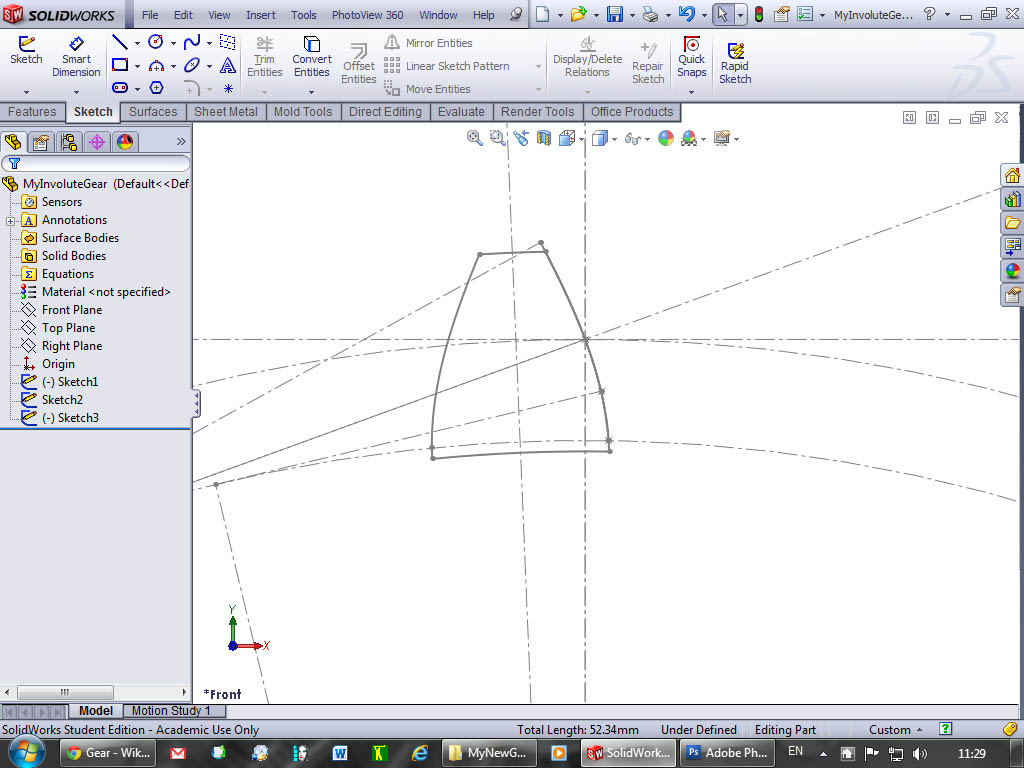
31) Mirror the profile.
Step 32:
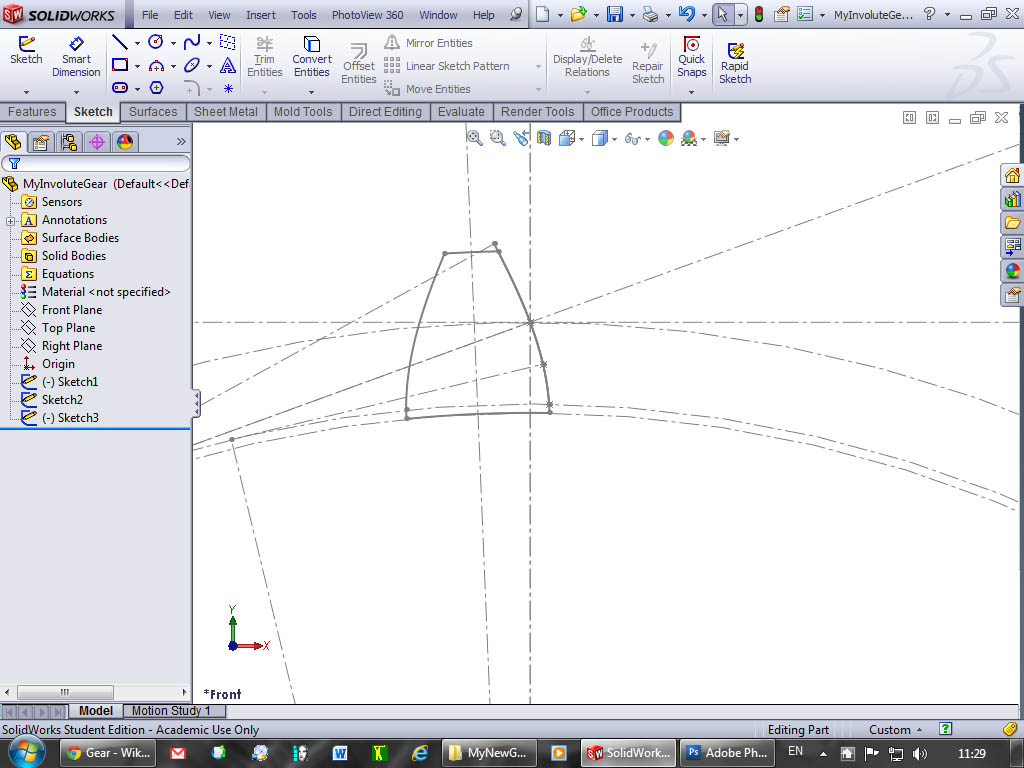
32) Depict the base (inner) circle.
Pace 33:
33) We are now prepare to extrude the gear. Make a new sketch on the front plane …
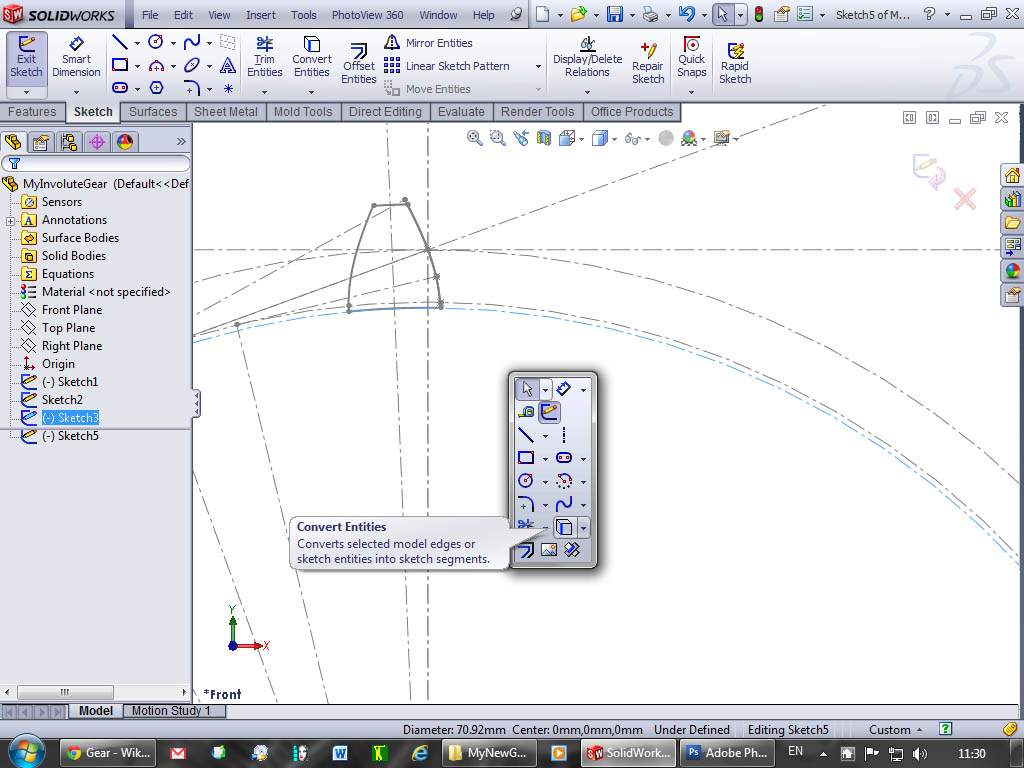
Step 34:
34) … and choose "Convert Entities"
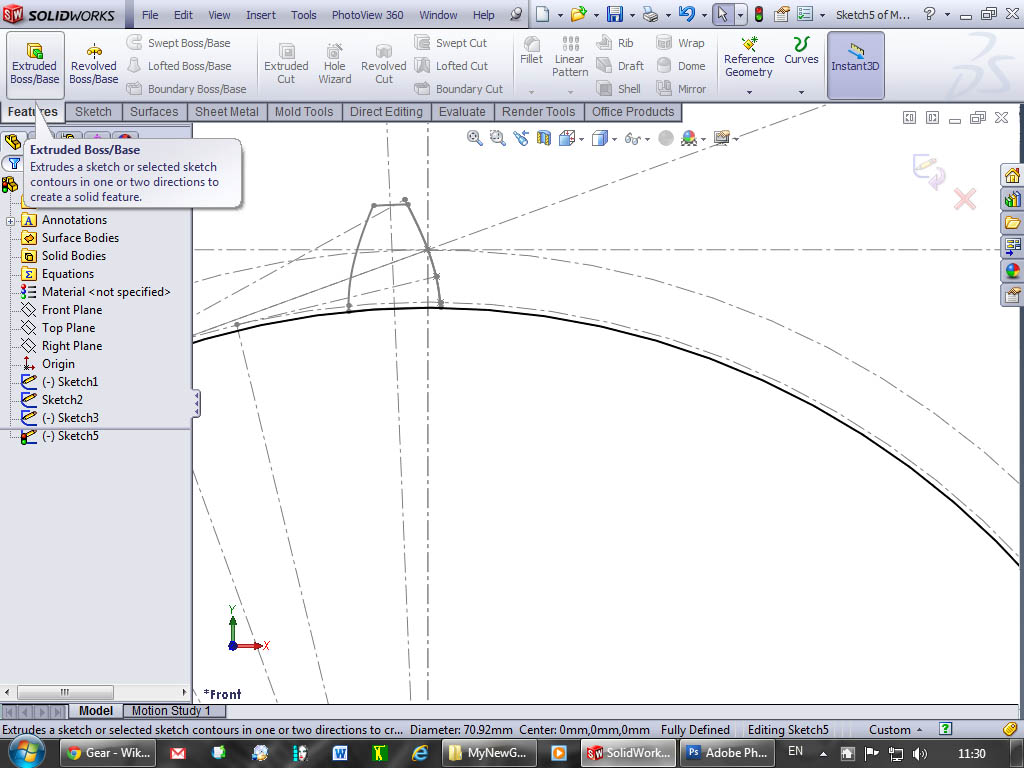
Stride 35:
35) Select the inner circle and click the light-green cheque mark.
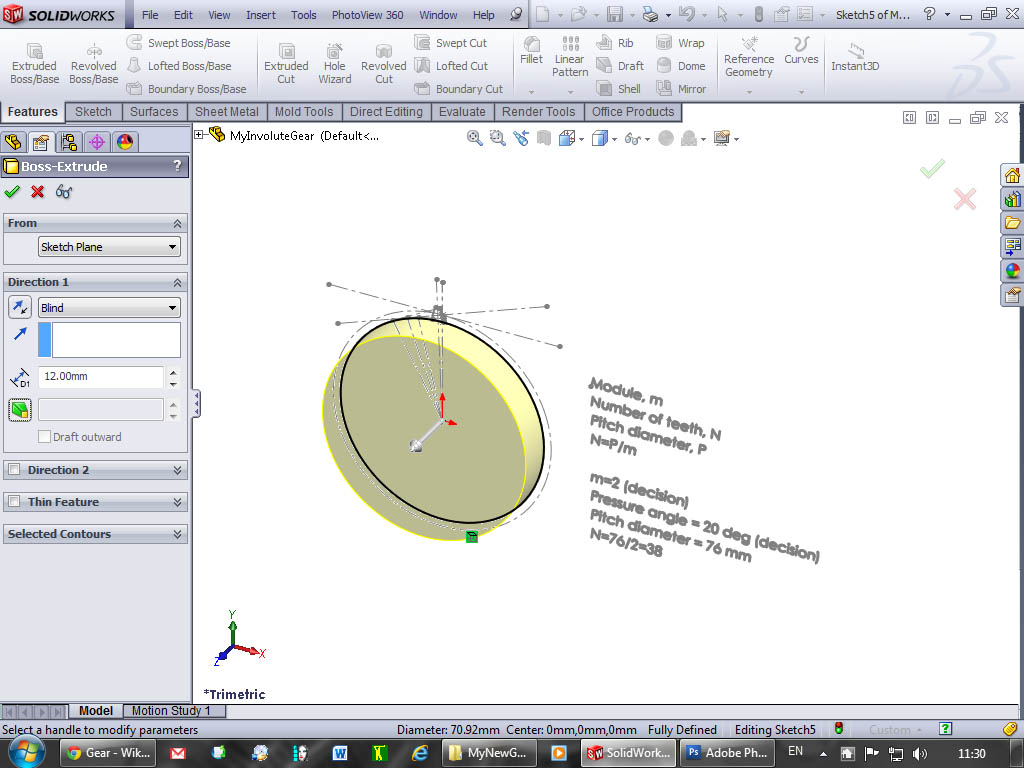
Step 36:
36) Extrude the base cylinder. I chose a 12 mm wide gear cycle.
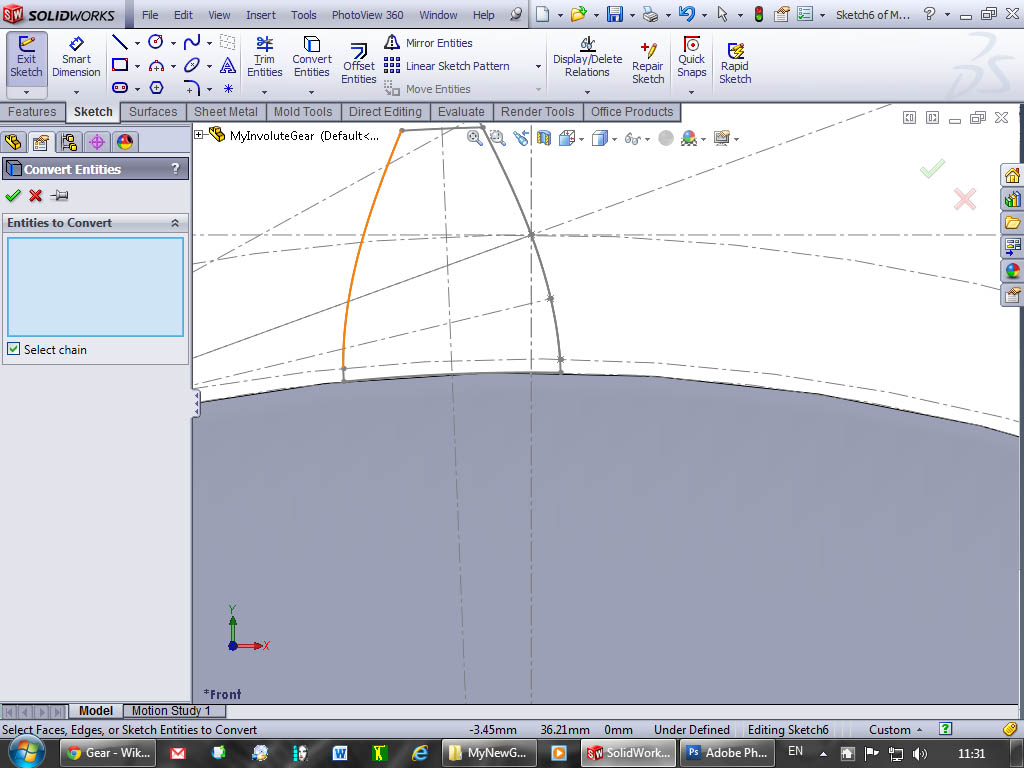
Pace 37:
37) Make a new sketch on the forepart plane, choose "Convert Entities" again and check "Select concatenation".
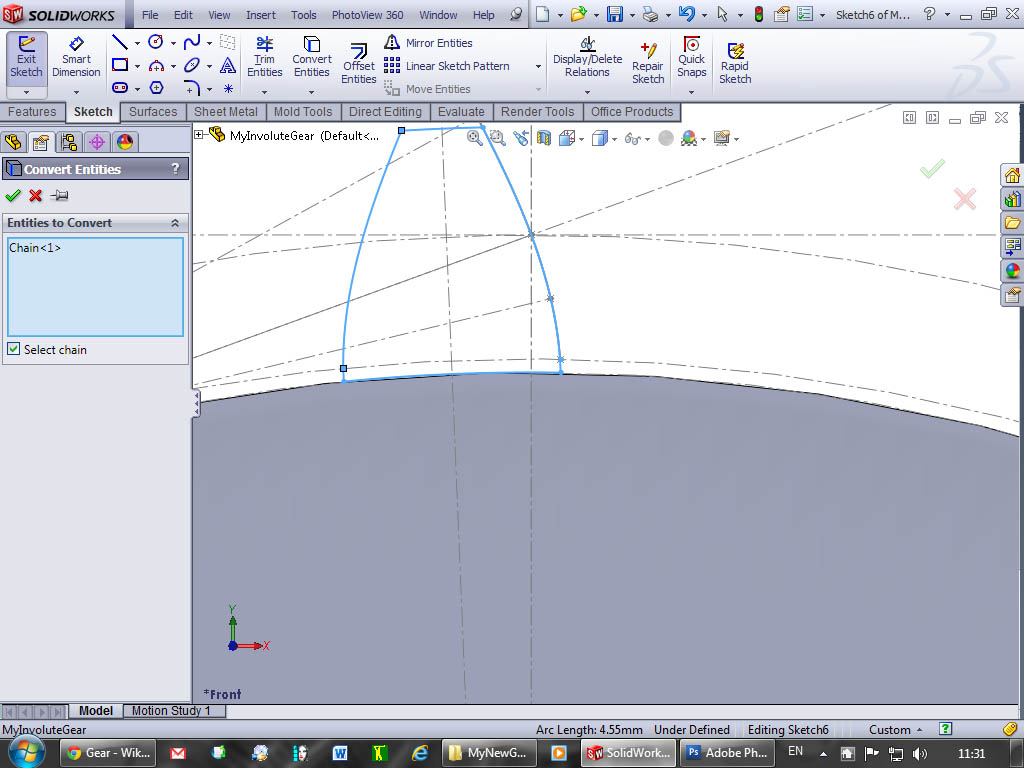
Footstep 38:
38) Click on the gear tooth profile and click OK.
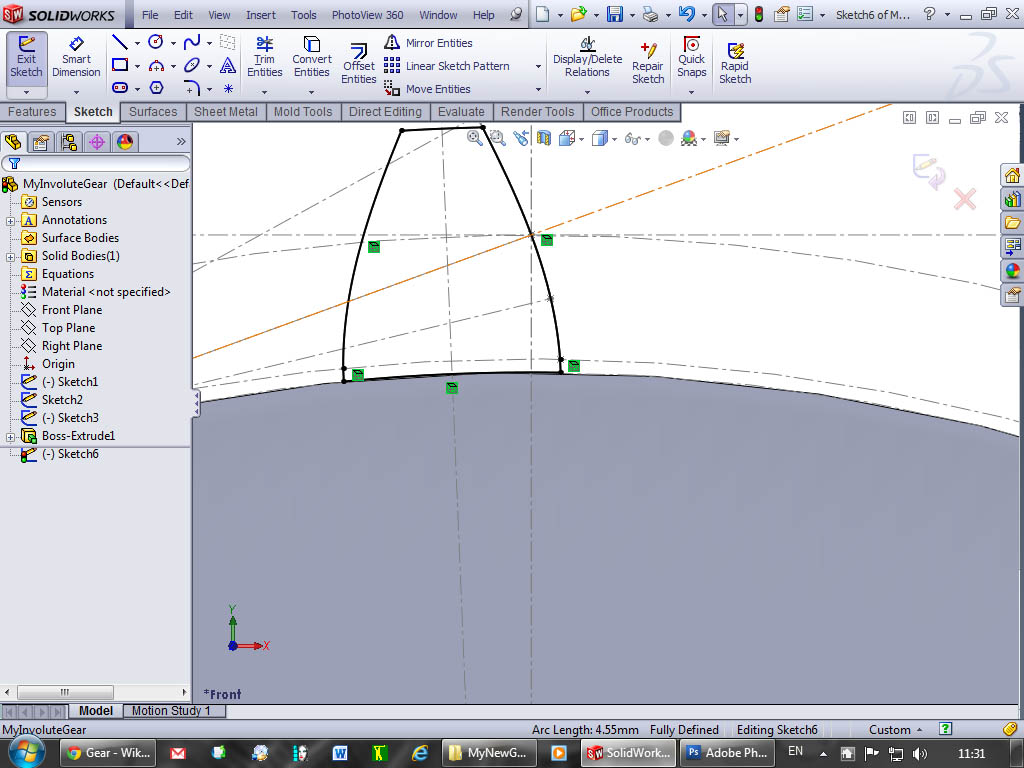
Step 39:
39) Do another extrude …
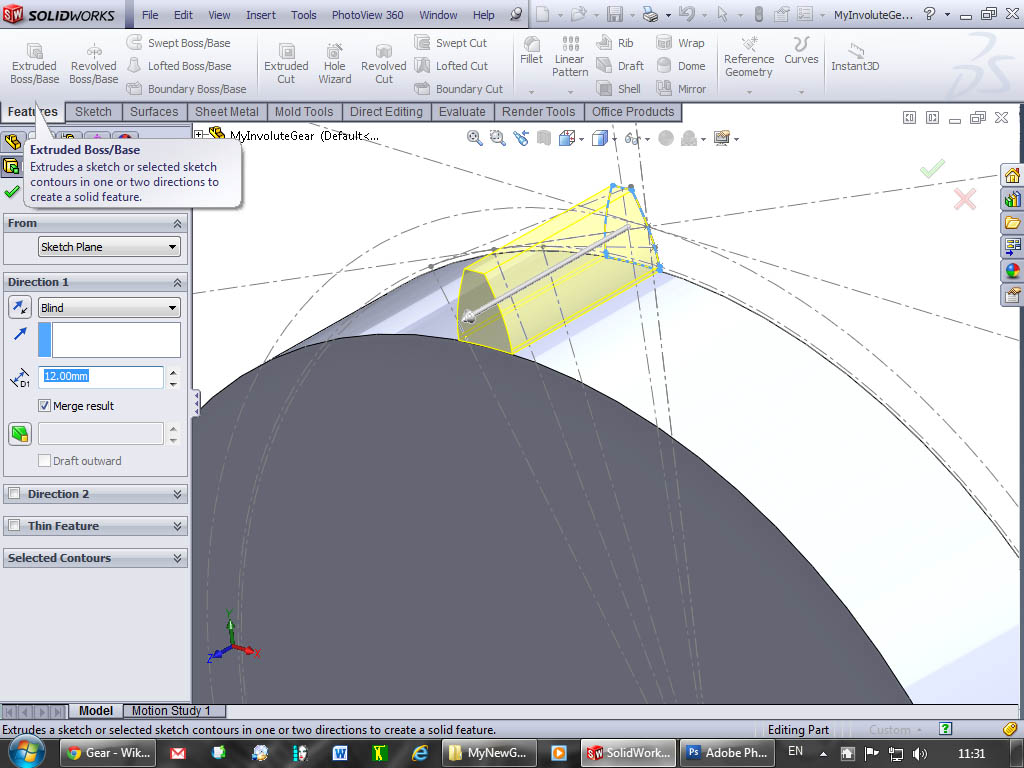
Step forty:
40) … using the Up to surface and select the front face of the gear.
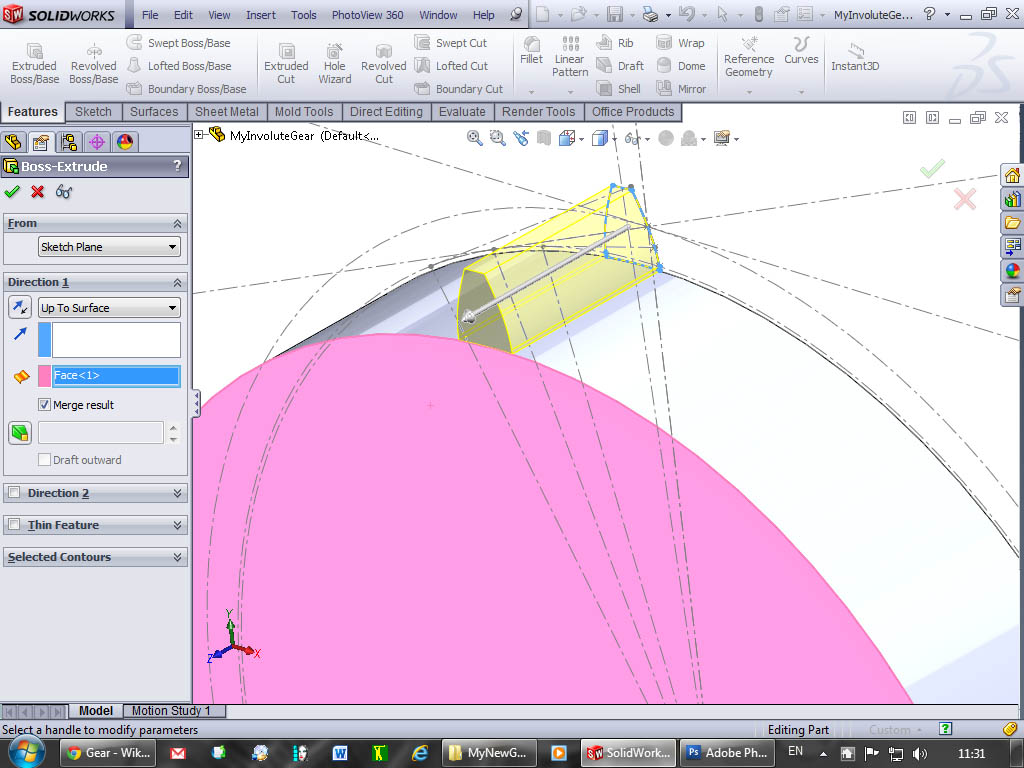
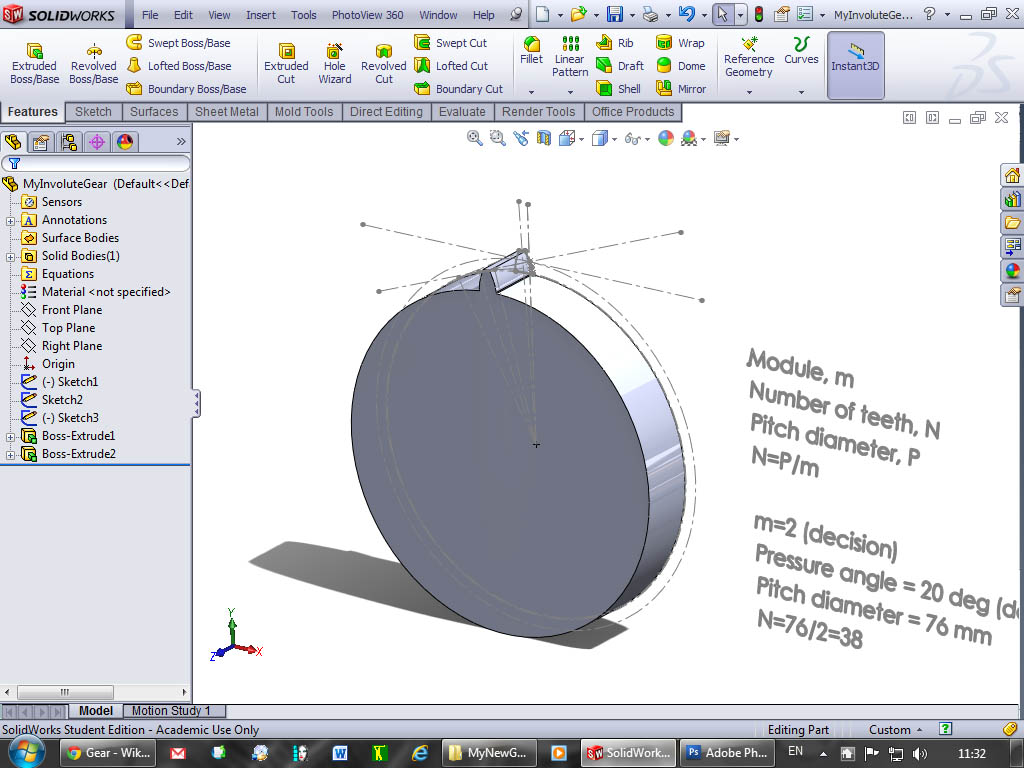
Step 41:
41) This is the outcome: The gear wheel with one tooth.
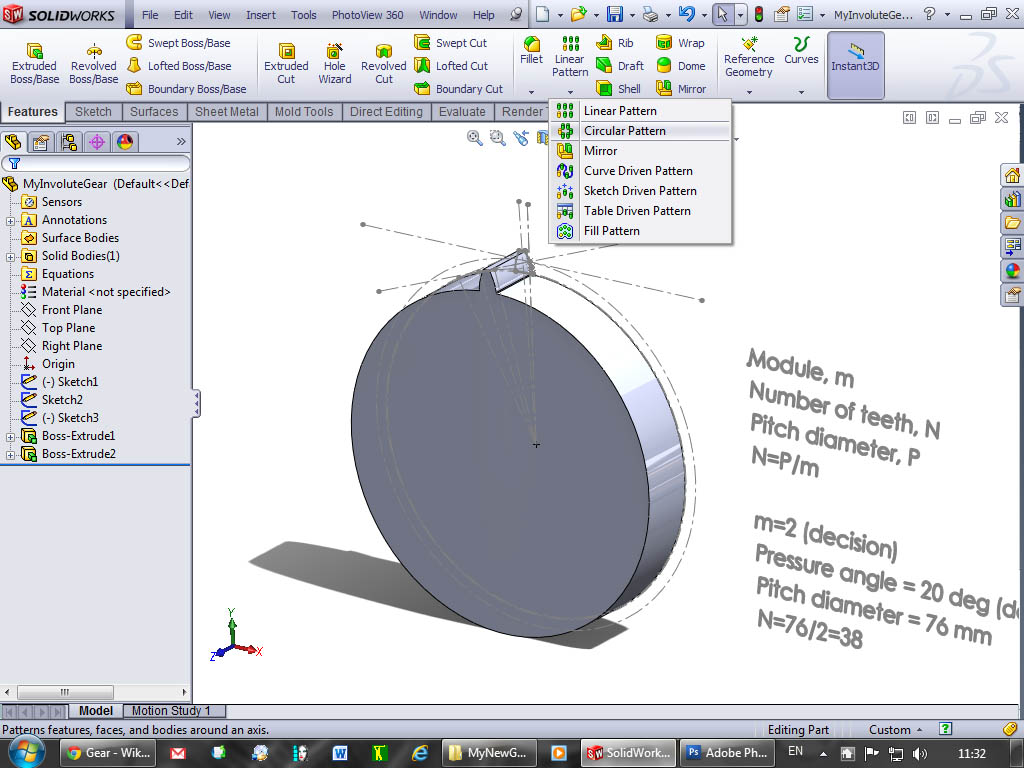
Stride 42:
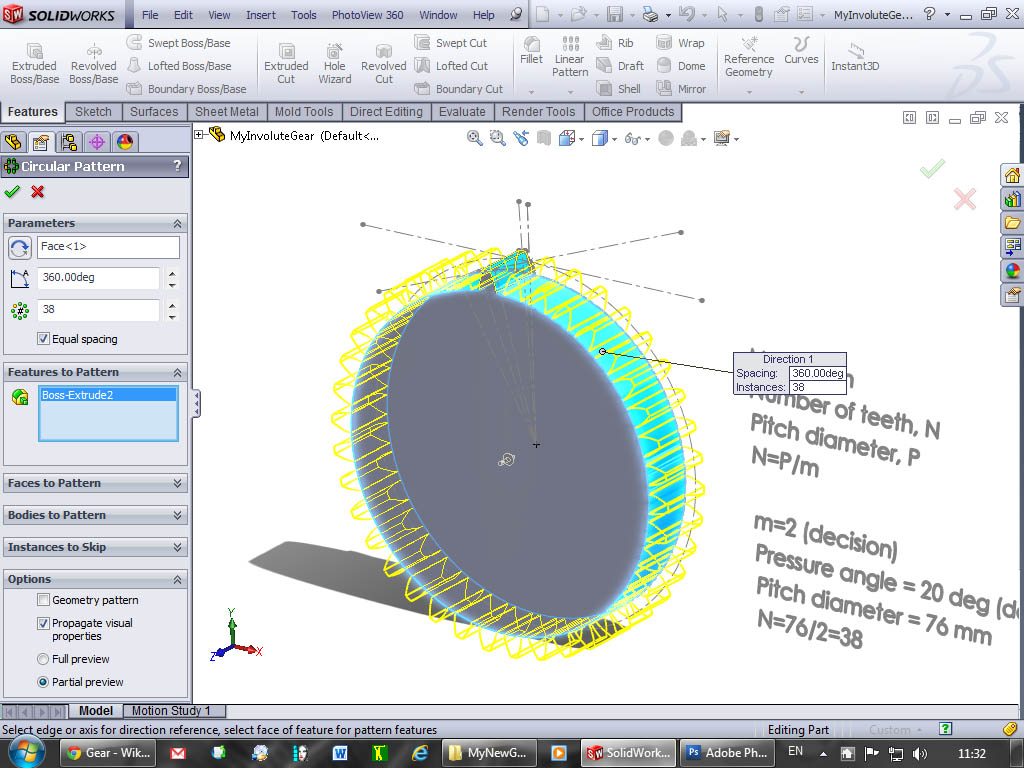
42) Choose "Round Pattern" to copy the tooth, select the outside face and the tooth equally "Characteristic to Pattern". Specify 38 instances, equal spacing over 360 degrees and click OK.
Step 43:
43) The gear cycle is nigh complete.
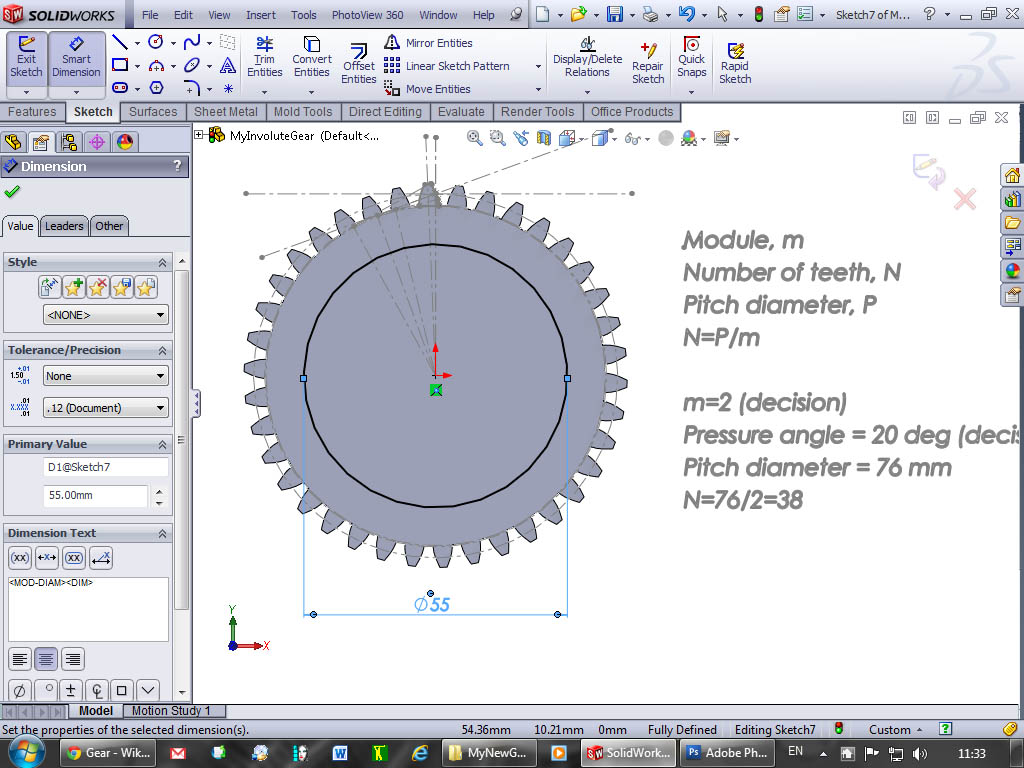
Footstep 44:
44) Cut away the centre with a 55 mm circle on the forepart face.
Pace 45:
45) And "Cutting-Extrude Through All" for improved visibility.
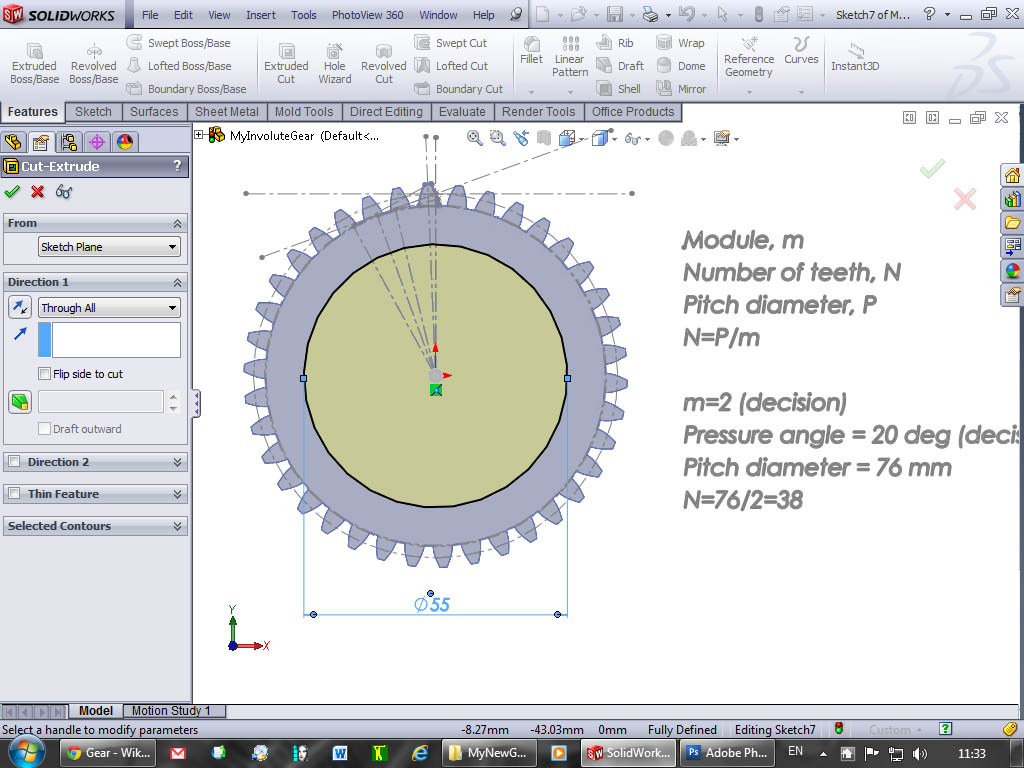
Stride 46:
46) Hibernate the sketches past selecting all and choosing "Hide" (the glasses).
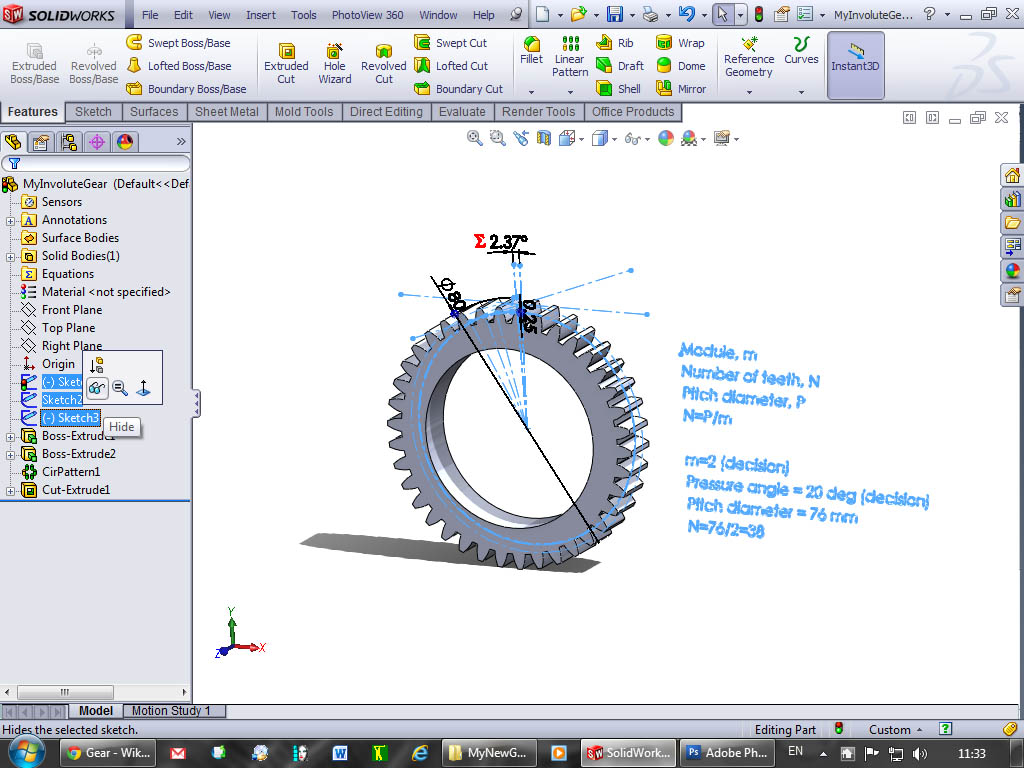
Pace 47:
47) Now comes the all-time function: Verification of the design. Save and choose "Brand Assembly from Part".
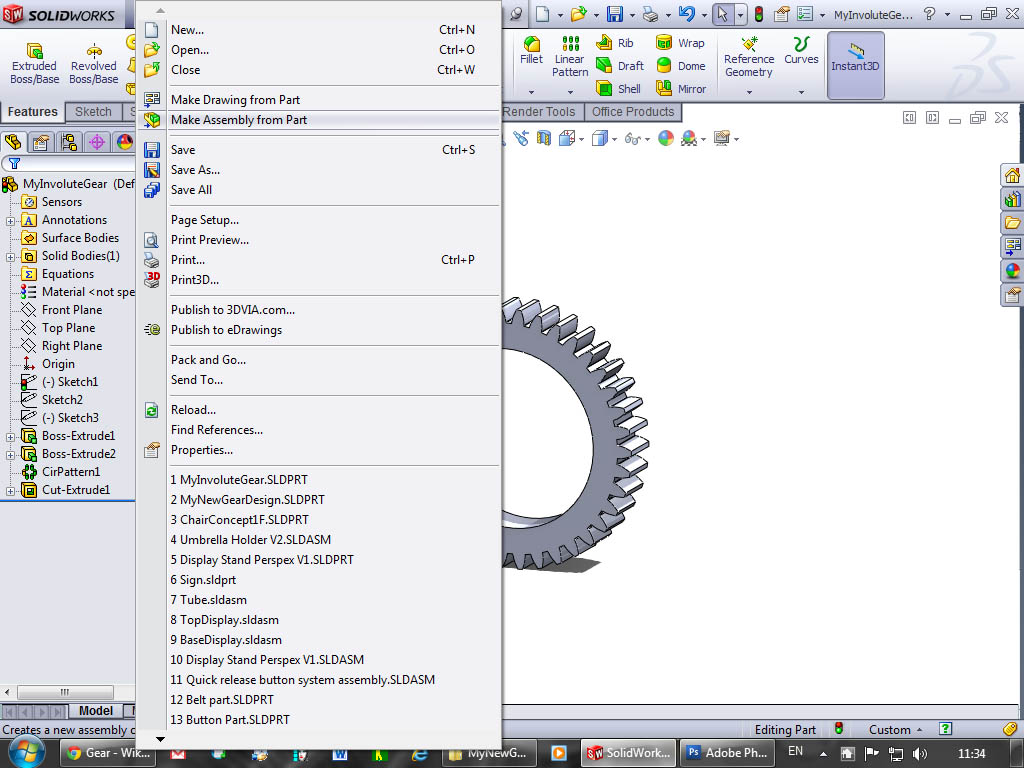
Pace 48:
48) Click the green checkmark for OK. This gives an assembly with the gear bicycle at the origin.
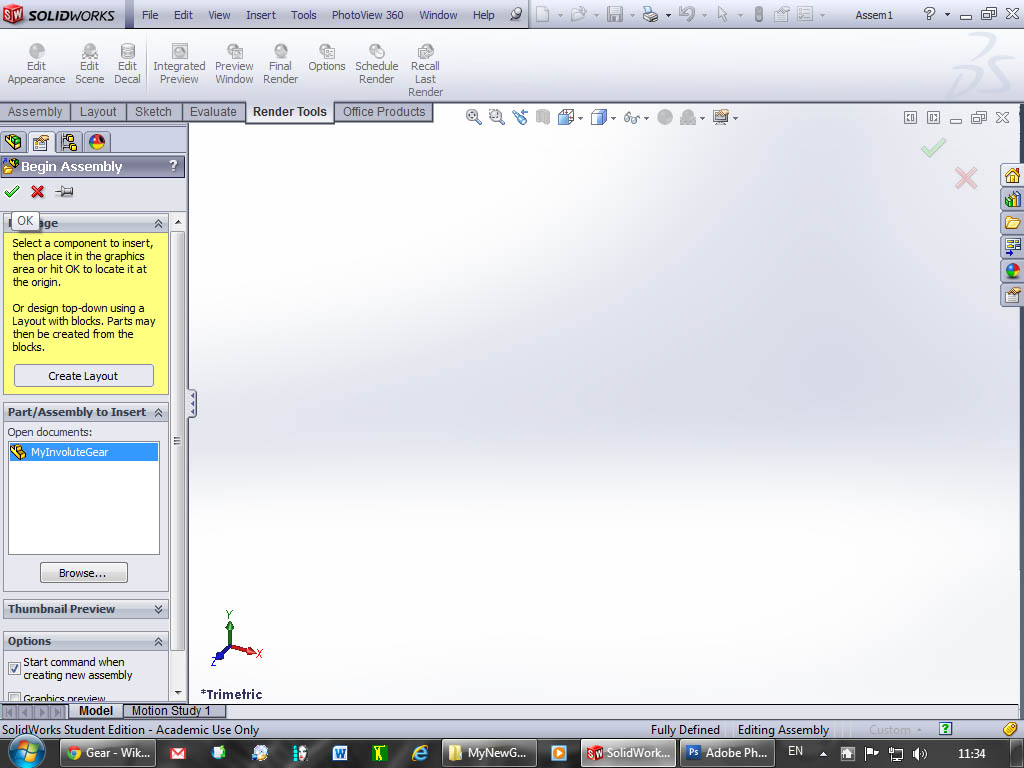
Step 49:
49) Ctrl-drag a 2d copy of the gear wheel into the master window.
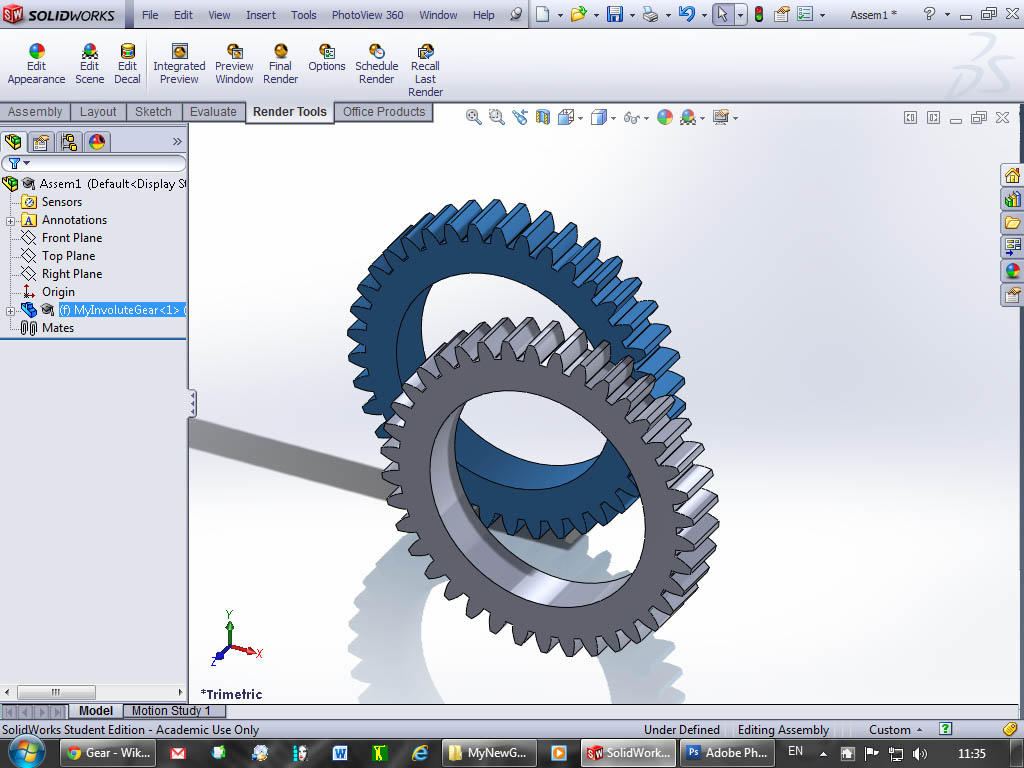
Footstep 50:
fifty) Choose "View Temporary Axes" to show axes for mating.
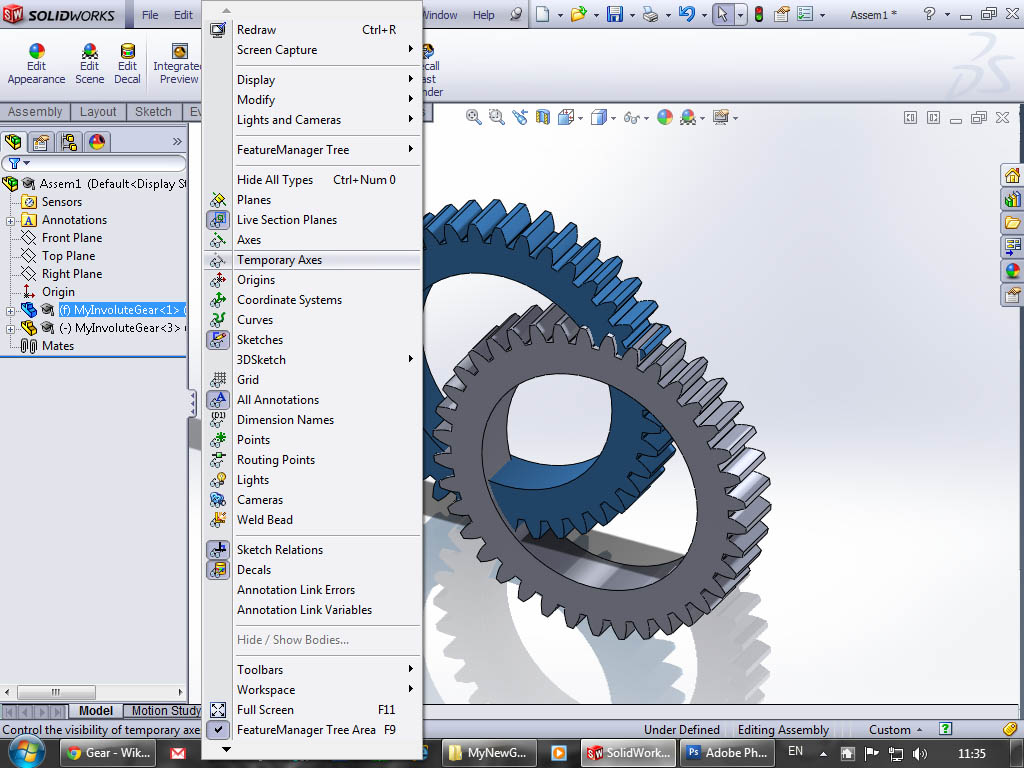
Footstep 51:
51) Ctrl-select the 2 middle axes and click the mate (paperclip) icon that pops-up.
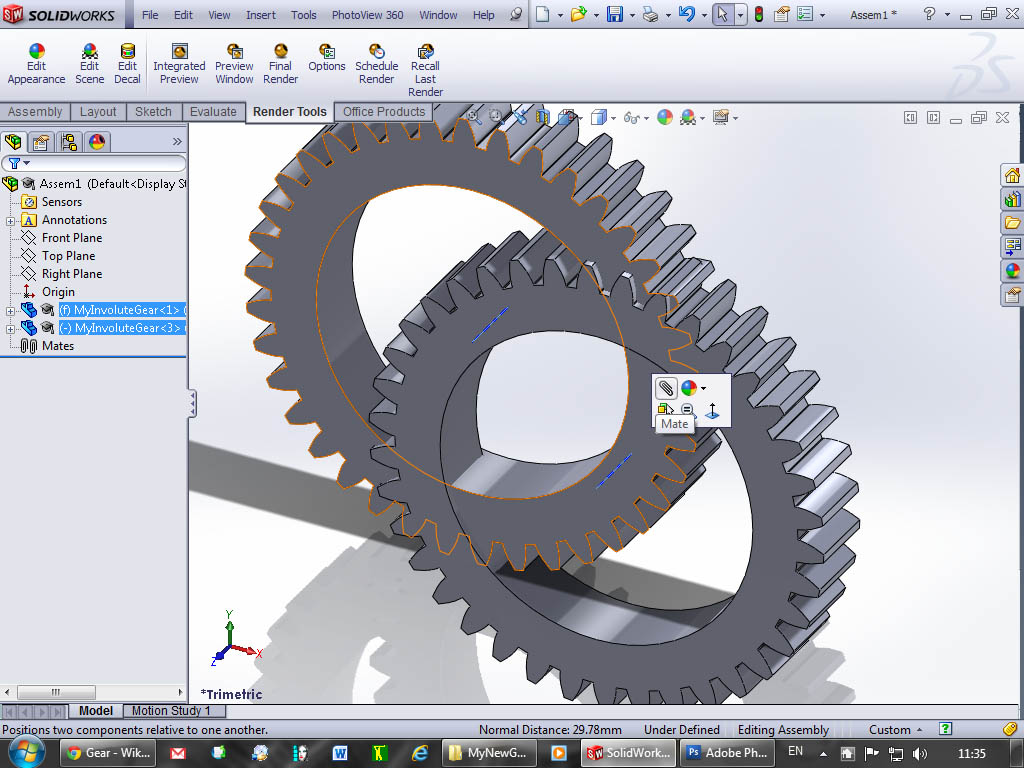
Step 52:
52) Add a altitude mate of 76 mm (= the pitch diameter) which is likewise the distance between the gears when they accept equal size.
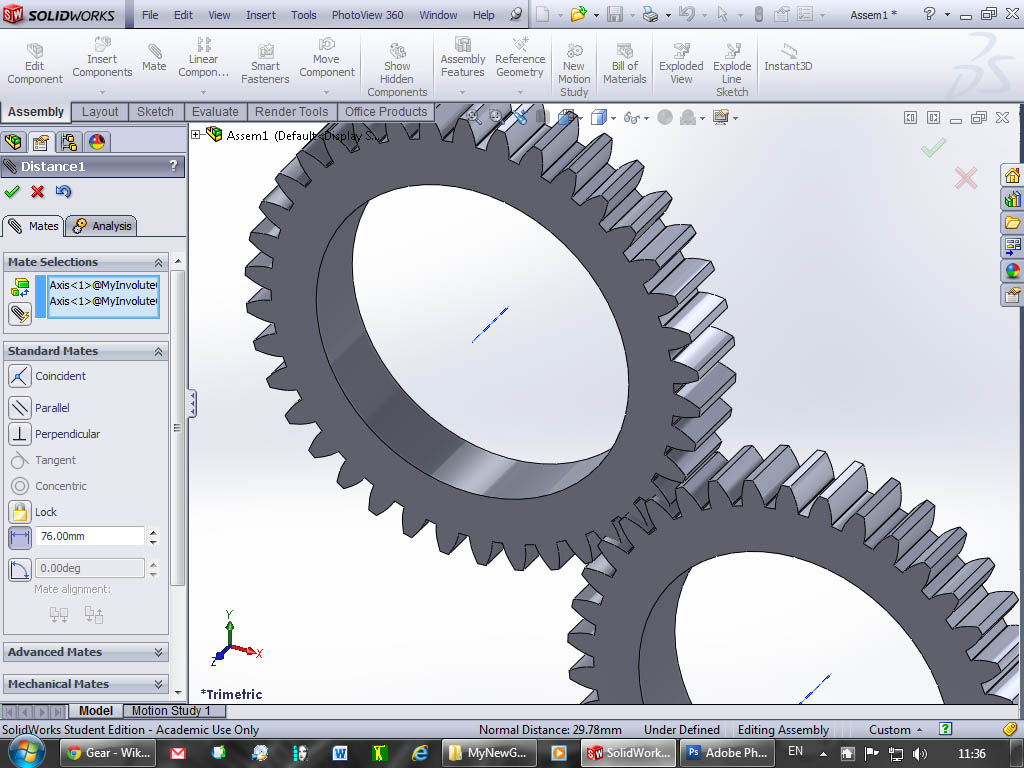
Step 53:
53) Mate the temporary axis of the 2nd gear to the associates acme plane …
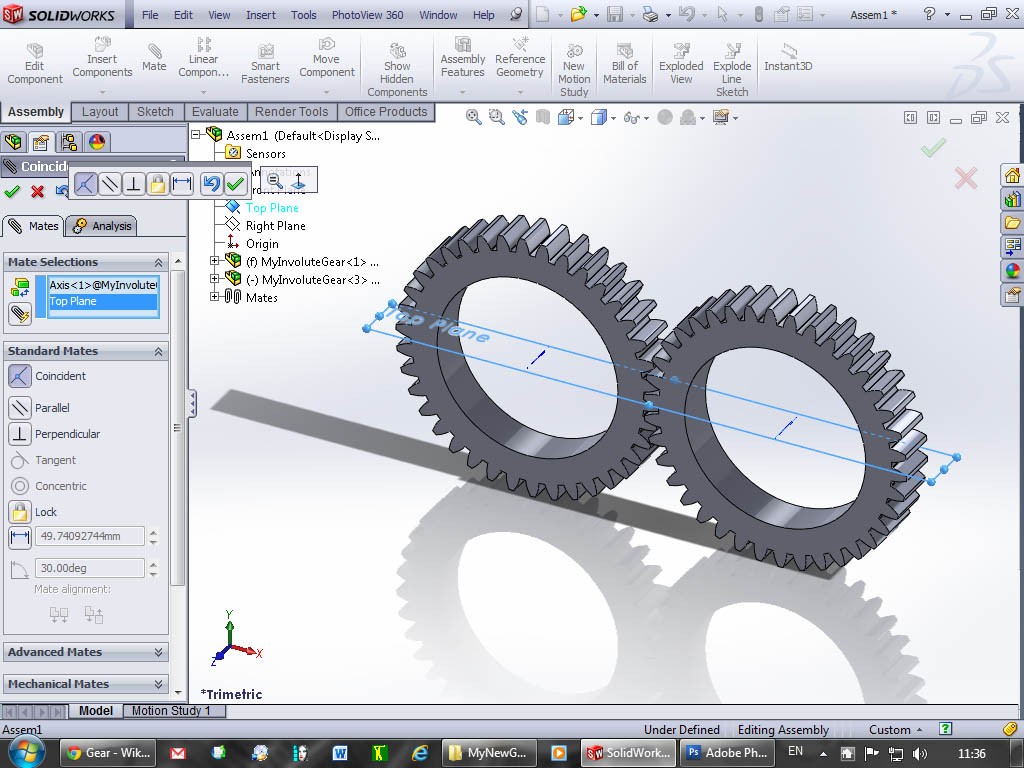
Step 54:
54) … and mate the front faces of both gear wheels.
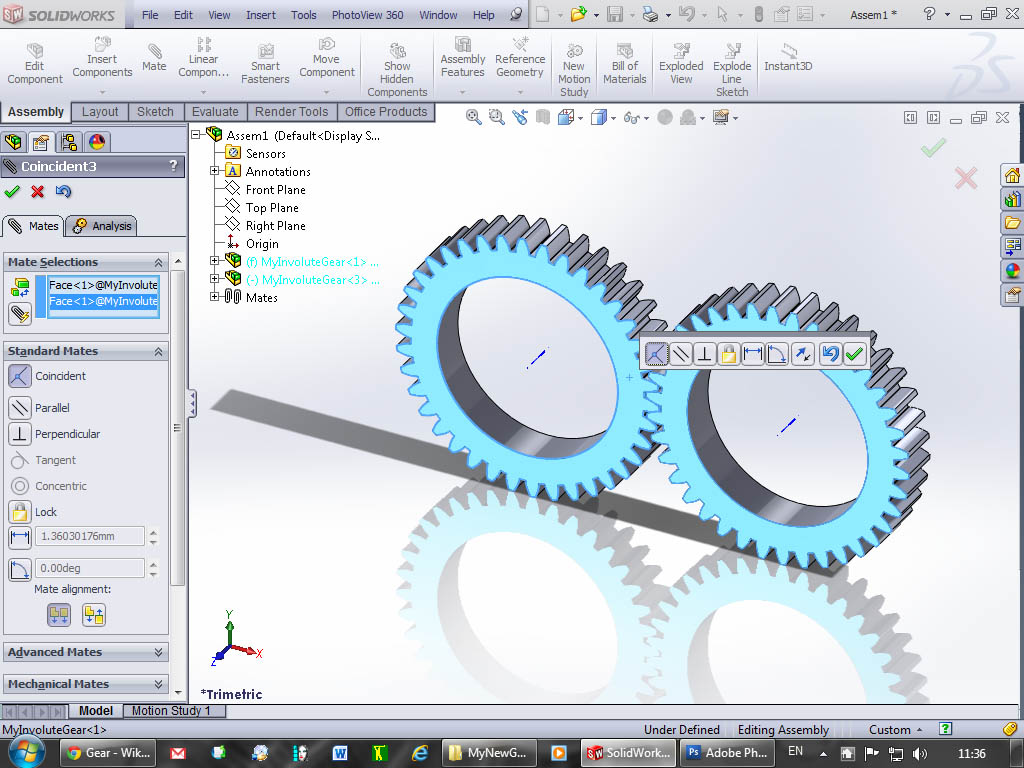
Step 55:
55) We are now virtually gear up, but the first gear is fixed and can't turn. Right-click on the first gear bike (the 1 with that has (f) in forepart of its name) and choose "Float".
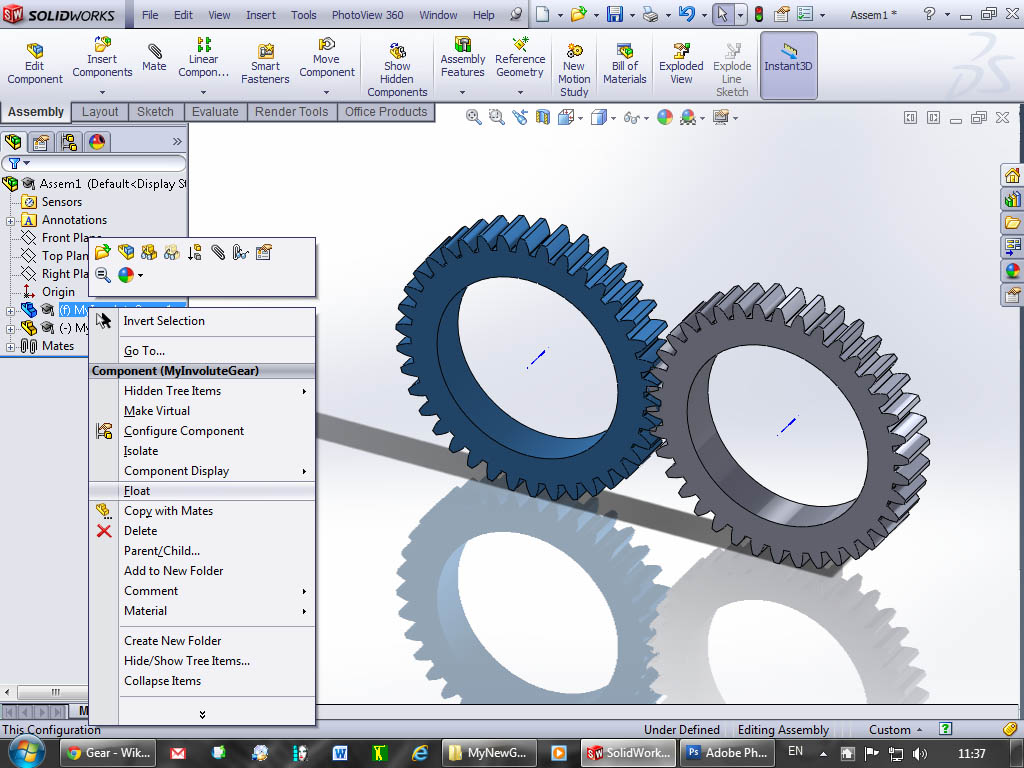
Footstep 56:
56) Now it tin move everywhere and then we demand to fix it so it tin only rotate. Mate the temporary axis to the assembly height aeroplane …
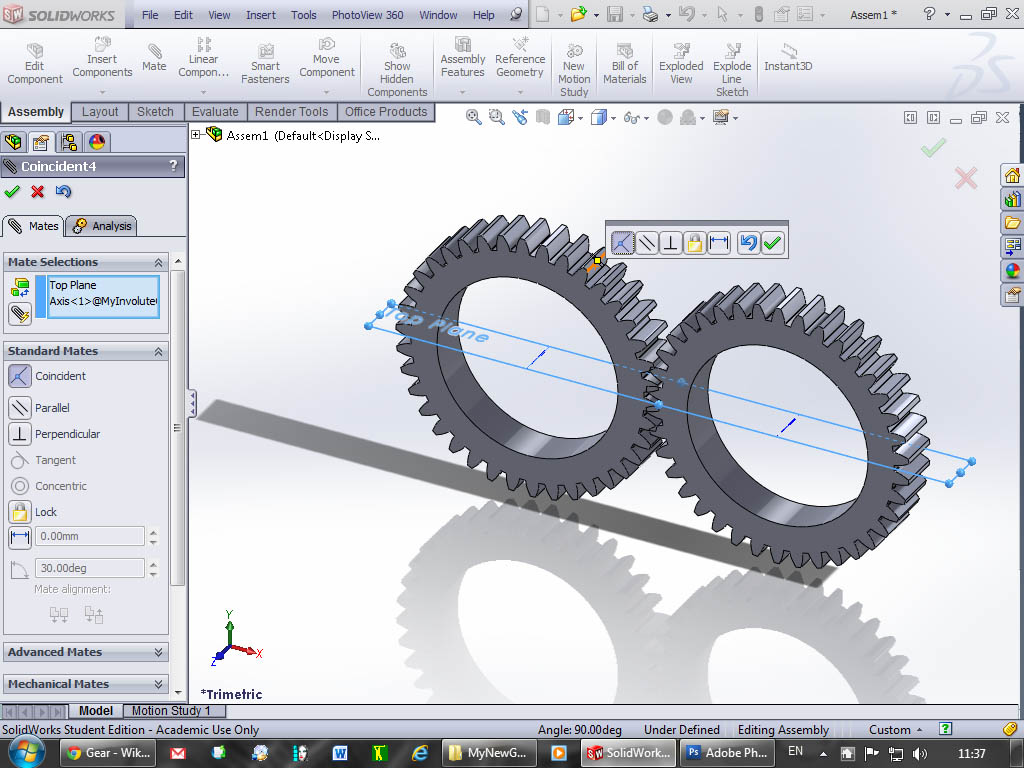
Step 57:
57) … Mate the temporary axis to the right plane …
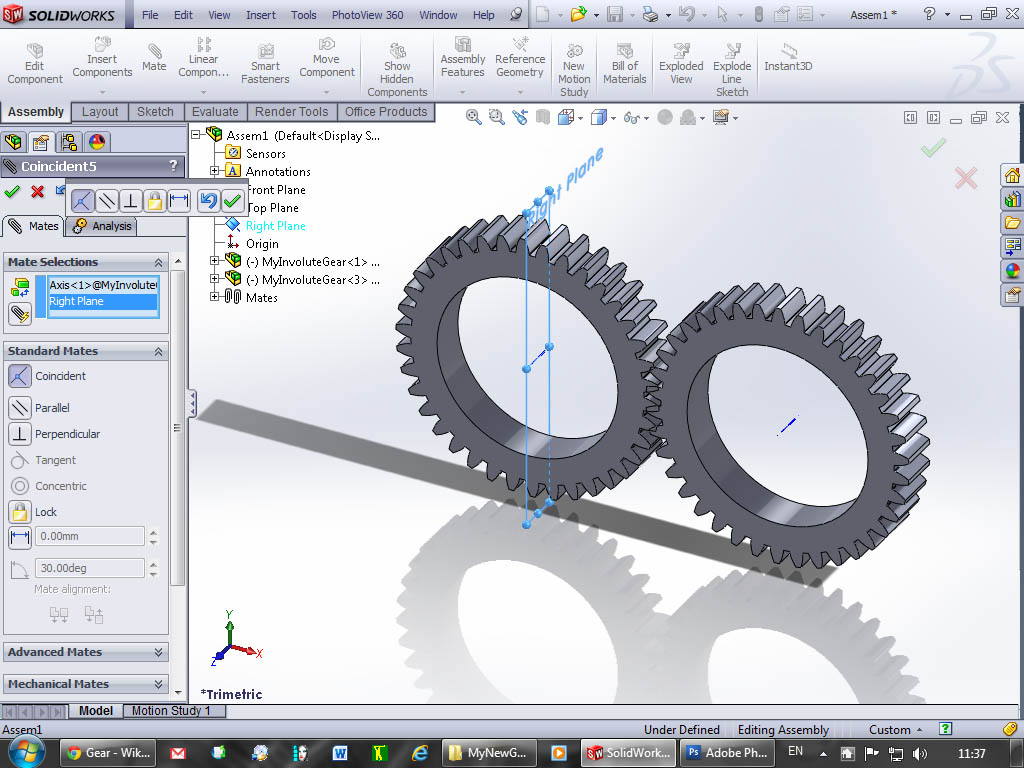
Step 58:
58) … and the forepart aeroplane to the associates front plane. Now both gear wheels tin can rotate independently but they stay centered.
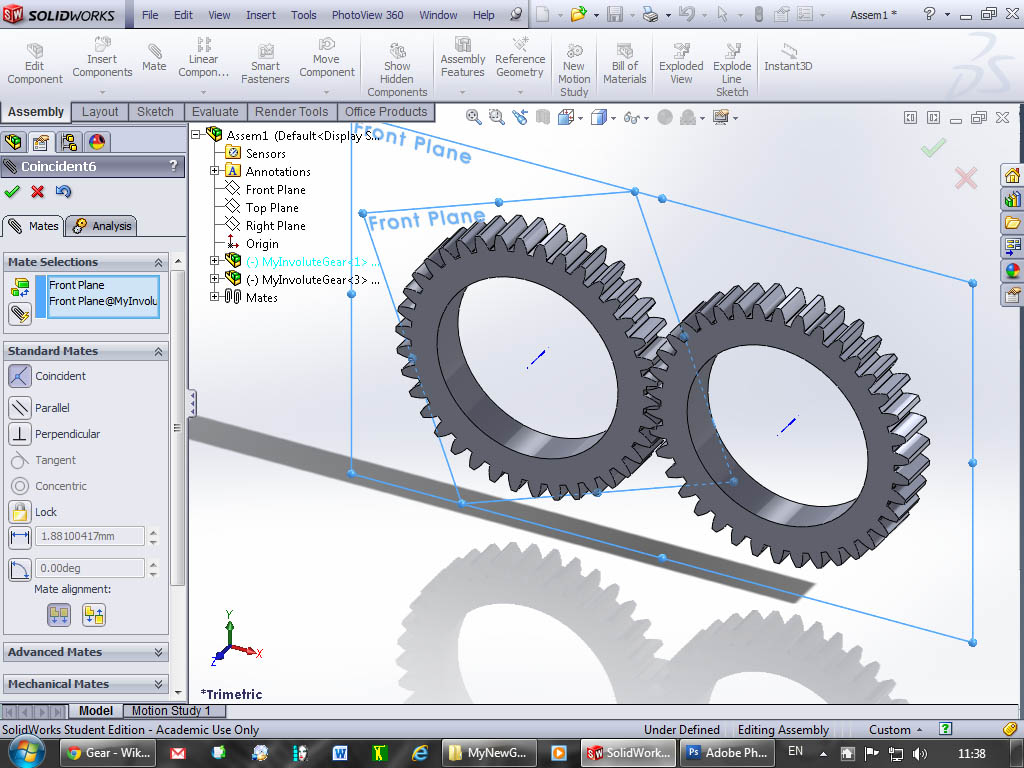
Footstep 59:
59) Go to a front view and zoom into the teeth that mesh.
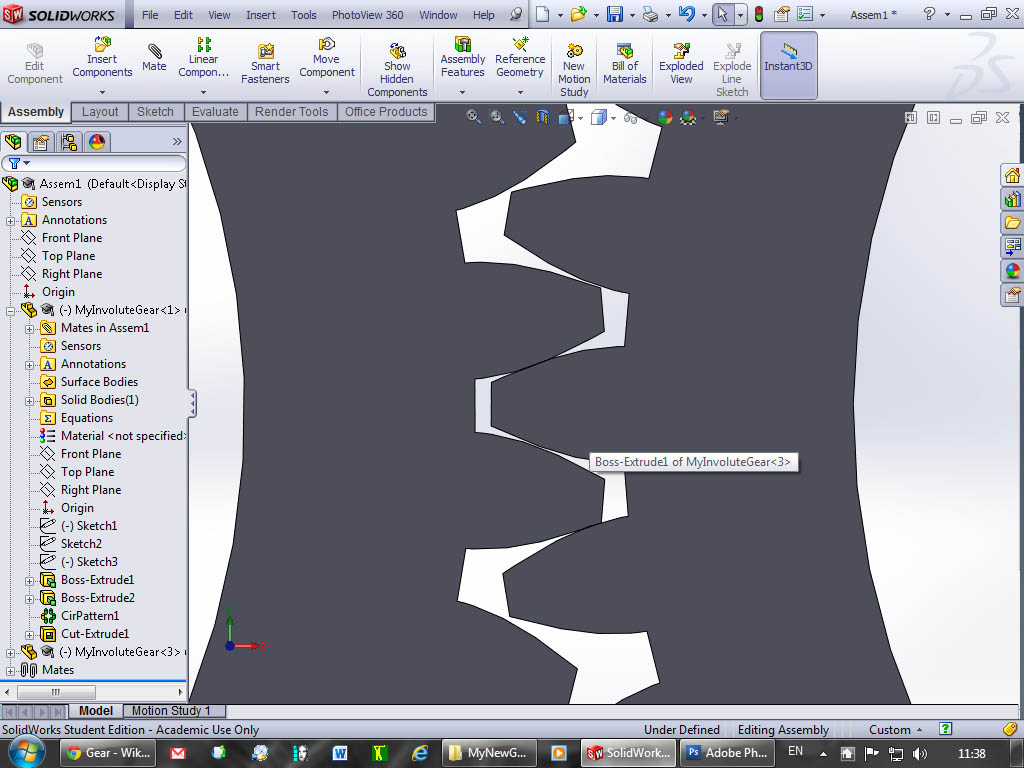
Step lx:
sixty) We need to cheat a little bit to make the adjacent step work, because the gears are too perfect and are always touching.
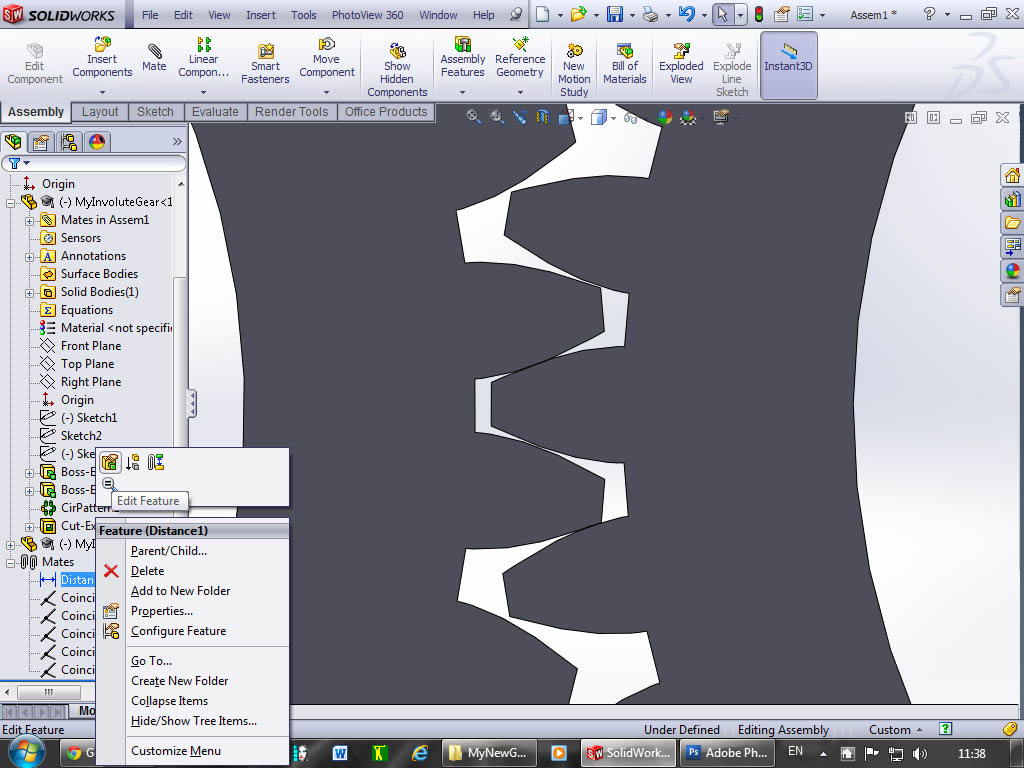
Step 61:
61) Right-click on the altitude mate and change it by a minor amount …
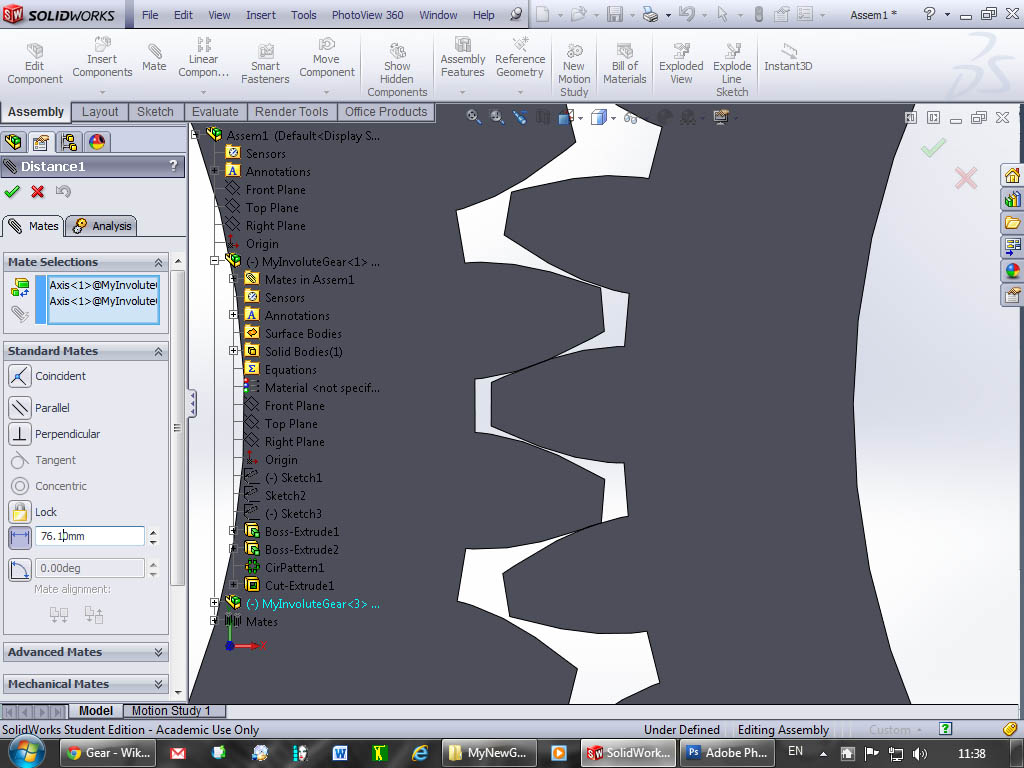
Step 62:
62) … e.grand. from 76 to 76.i mm. This gives a little slack that's necessary for the next steps to initiate.
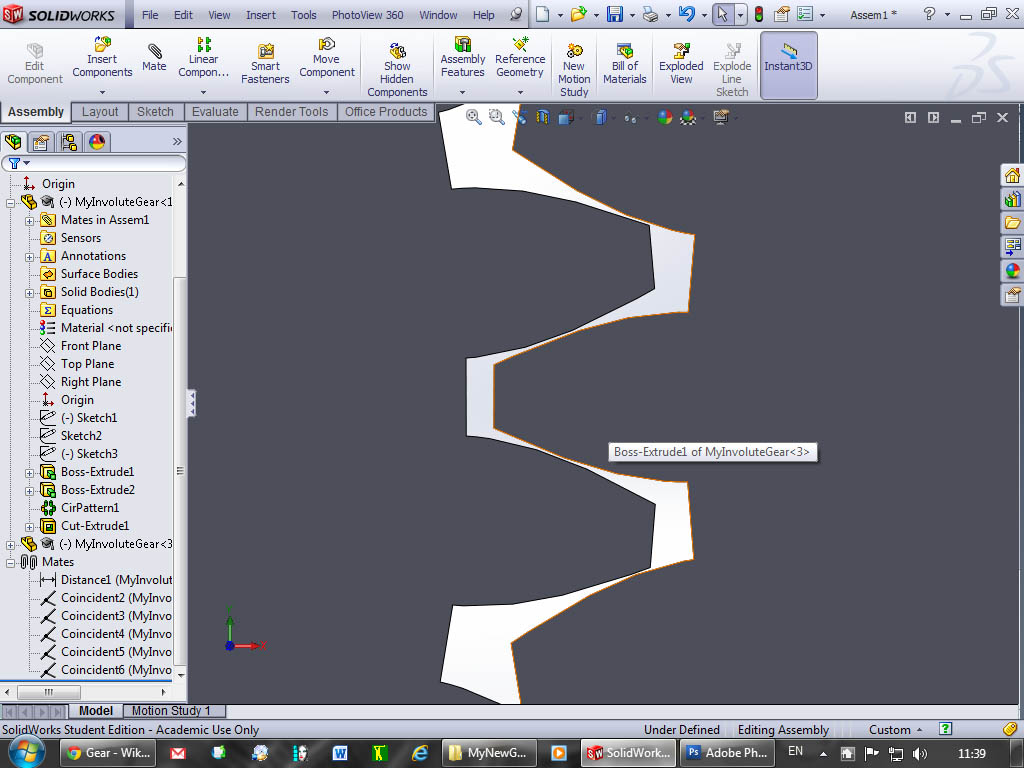
Stride 63:
63) Rotate one of the gear wheels so they do non touch on.
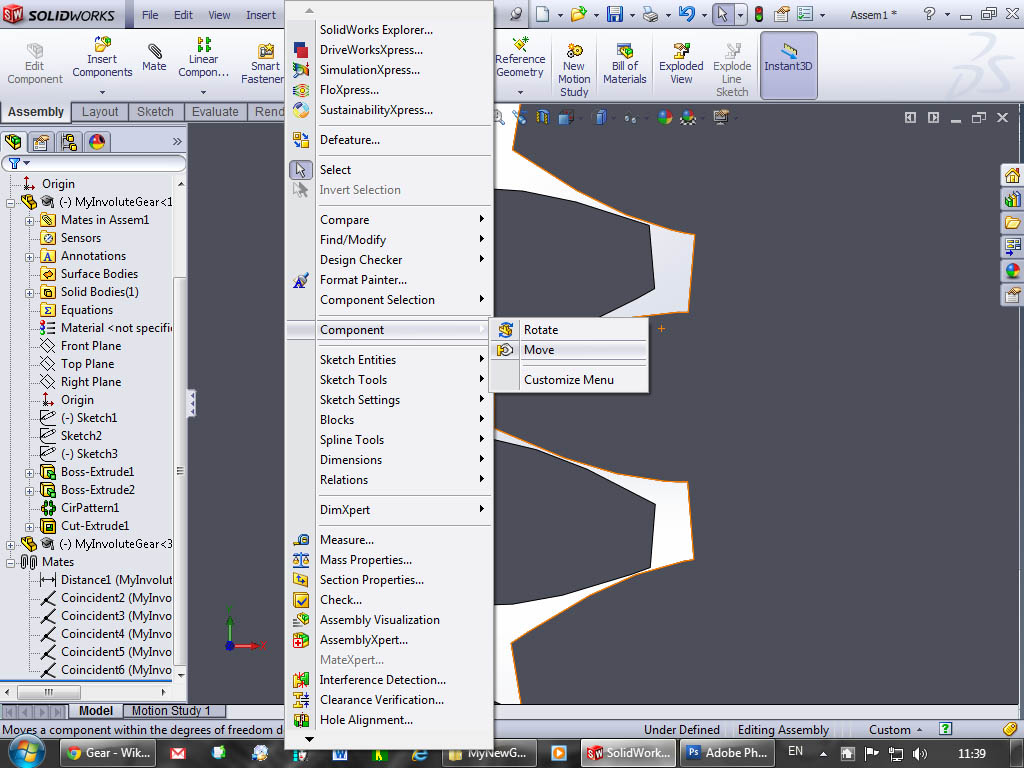
Step 64:
64) Cull "Tools->Component->Motility" from the acme carte du jour.
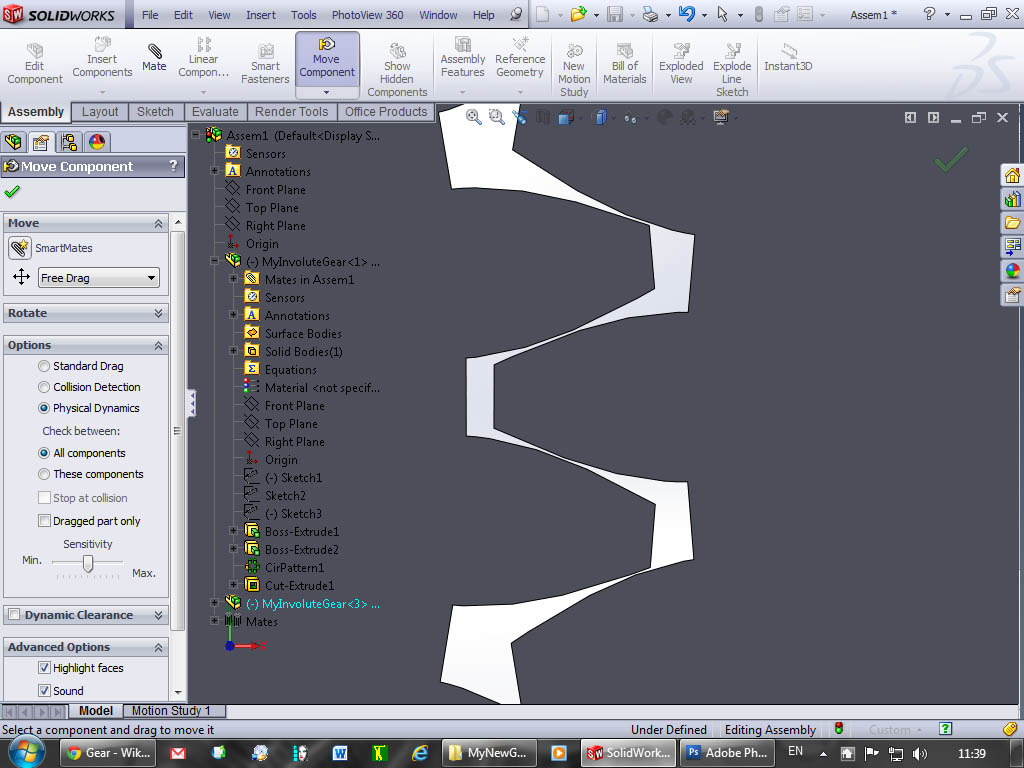
Step 65:
65) Click the radio button for "Physical Dynamics".
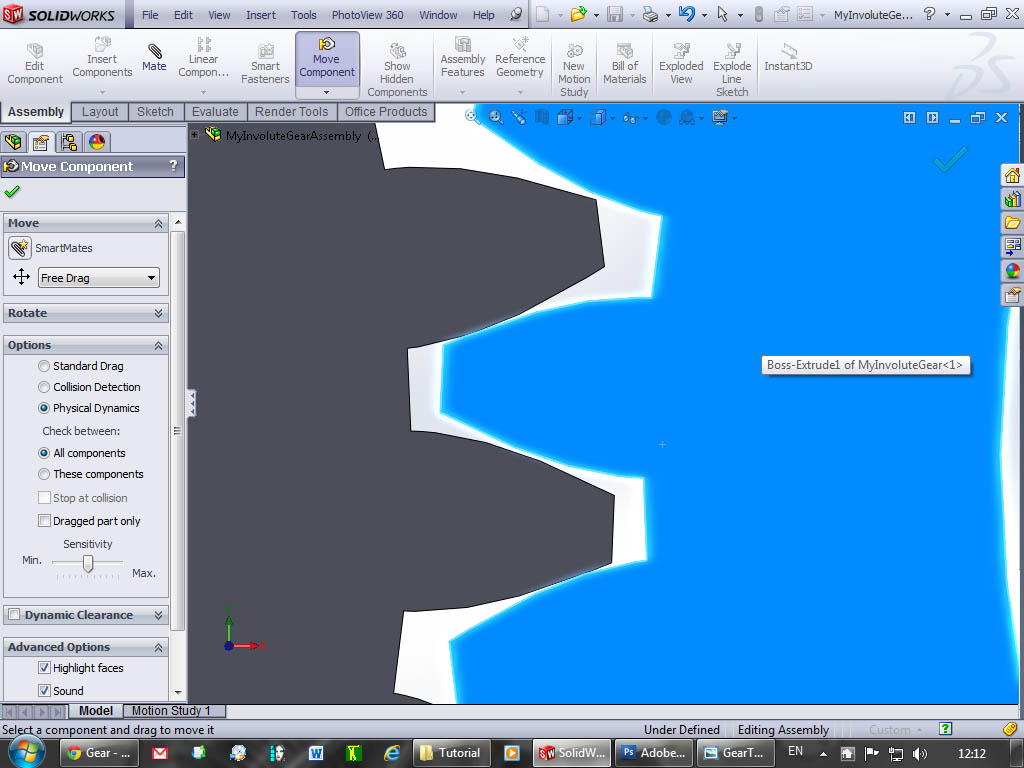
Footstep 66:
66) Click and drag 1 of the gears, and find that the other gear follows along and the involutes mesh very nicely. You lot tin can become backwards and forwards. This is And then Cool :-)
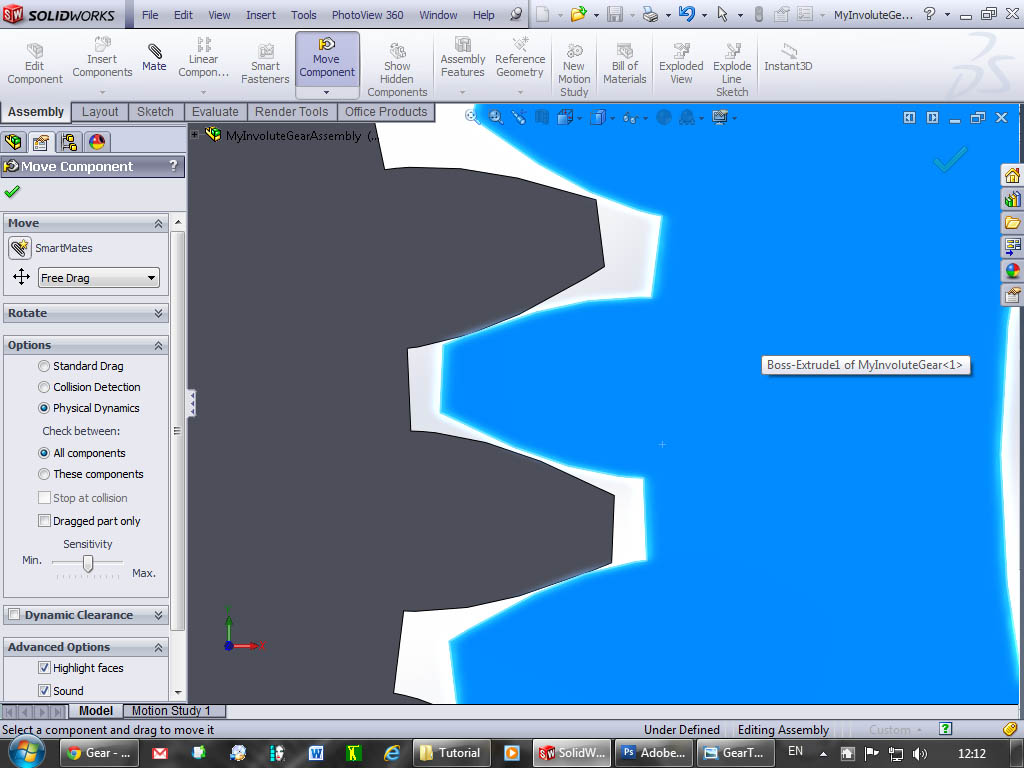
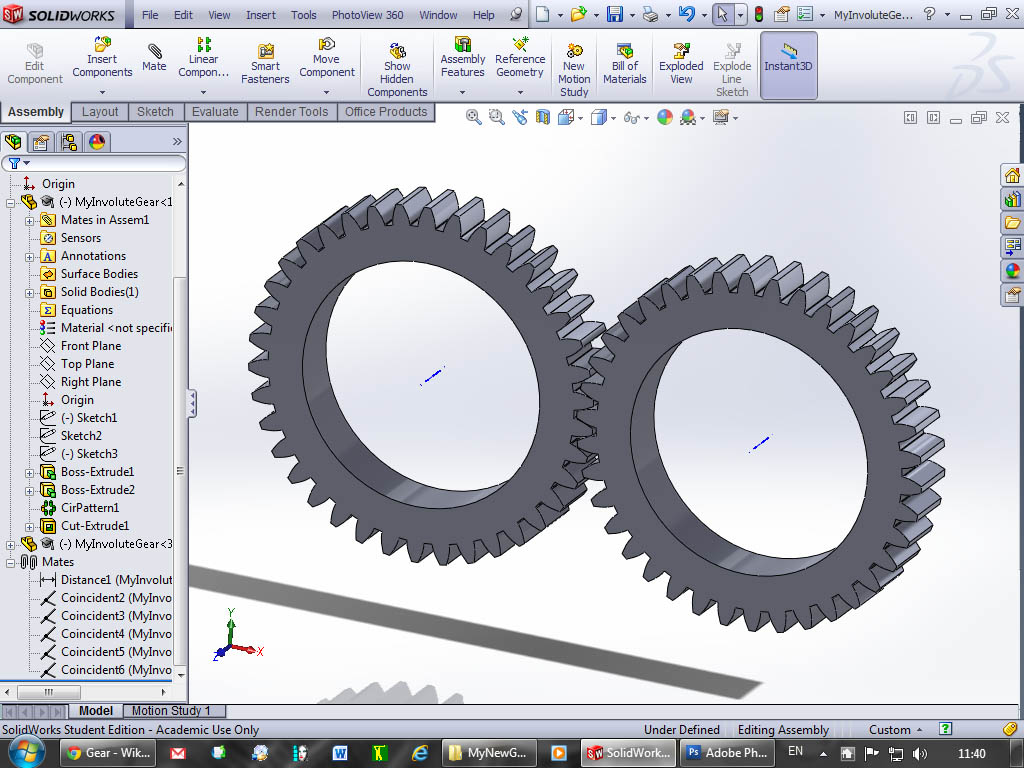
Step 67:
67) We're done. We take designed involute gears and verified that they actually work co-ordinate to design intent.

Source: https://grabcad.com/tutorials/tutorial-how-to-model-involute-gears-in-solidworks-and-show-design-intent
Posted by: sandovalventing.blogspot.com
0 Response to "How To Draw An Involute Gear"
Post a Comment