

Does The Deschutes River Draw Down In The Summer

H2o Woes: The Deschutes River
By Nolan Morris. Nov. 12, 2015. The quality of a river is dependent upon its tributaries. The drought crunch on the Deschutes River this by summer marks a stark warning. In the coming years, like issues may exist felt throughout the Columbia River Basin.
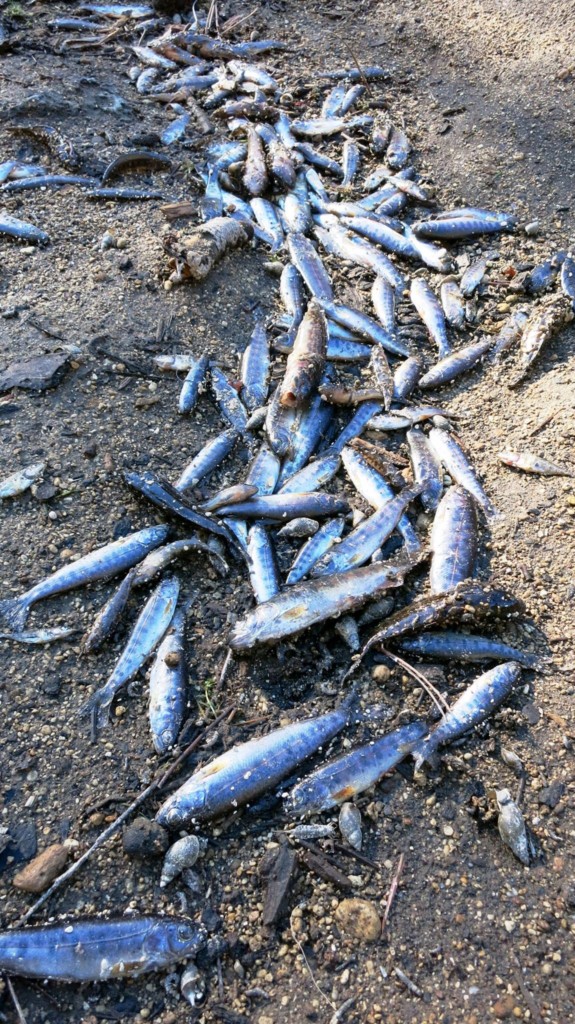
[/media-credit] "Under rigid drawdown schedules many trout were left high and dry" when their water ran out.
The health of the Columbia River is dependent on the immense watershed that supplies its water and the life within. Ranging across seven states and one Canadian province, the headwaters of the Columbia are vast.
The current drought has brought into question the wellness and direction of diverse rivers throughout this region. The Deschutes River, and more than specifically, the portion referred to as the Upper Deschutes–ranging from the Wickiup Reservoir down to the city heart of Bend–has been in the headlines a lot this summer every bit the ecological wellness of the river falters and the visibility of how the river is managed increases.
"Mild and anemic" is how Gail Snyder of Central Oregon Landwatch referred to the Upper Deschutes River, which is protected under the Wild and Scenic Rivers Act. More than a convenient play on words, this depiction of the river is heartbreakingly accurate for substantial portions of the river.
This October marked the third sequent year that fish have had to exist rescued from stranded pools of water along the Lava Island Falls channel of the Deschutes River. This yr'south effort, led by Oregon Section of Fish and Wildlife, saw over three,500 trout rescued in improver to hundreds of sculpin and whitefish. Kim Brannock witnessed the drying upwards of this channel in autumn of 2013 and the dead fish that lined the stone bed of the channel. Compelled to practise something, she gathered some family members, buckets and nets and rescued as many of the surviving stranded fish equally possible.
After her third year involved in the rescue, Kim started the Deschutes River Keepers, which she hopes will make full a void in representing the ecological well being of the Upper Deschutes River. Brannock is quick to point out that the Lava Island fish rescue endeavour represents a small portion of the fish stranded throughout the entire river and that the stranded fish are only one of many devastating symptoms of a river whose wellness is wavering.
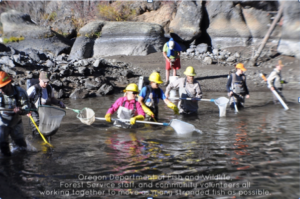
[/media-credit] Staff and volunteers work to take hold of and movement fish to deeper h2o.
Traditionally known for its incredibly consistent year-circular water level (the river benefits from a big system of natural springs), the Upper Deschutes River now suffers severe ecological deposition. This is due to drastic changes to the river level, as managed by Wickiup Reservoir. April through September marks the irrigation flavor throughout Central Oregon, which ways Wickiup Reservoir releases h2o at a period charge per unit averaging 1300 ft3/south, only ranging as high as 1900 ft3/s.
Come Oct, the reservoir begins to save water again for the post-obit year, meaning h2o is discharged at a drastically reduced rate. On October two, the discharge rate was at 920 ftthree/s, and by October 12 the rate was down to 23 ft3/s (information retrieved from Bureau of Reclamation website, lawmaking WICO). This is a four,000 percent reduction in the amount of water flowing in the Upper Deschutes River over the grade of two weeks. An environmental science background is not required to recognize this artificial imbalance imposed upon the river will have extreme negative repercussions.
The abnormally high water flows during irrigation season are equivalent to a 25-year flood nether natural, unmanaged river atmospheric condition. This results in massive logjams and destructive erosion, which uproots trees, destroys portions of the riverbank and deposits excessive sediment downstream (Bend's Mirror Pond is the end destination for much of this sediment).
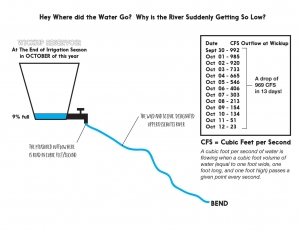
[/media-credit] The outflow of Wickiup is chop-chop reducing. "It goes from a rushing full river, to a trickle at 23 cfs over a total of but xiii days."
From flood-similar weather during irrigation flavour, severe drought-like water flows are and so imposed (the 20 ftiii/s water flow rate is 4 percent of the river's natural flow charge per unit) during the winter months when the river is managed to refill the reservoir. This incredibly unnatural modify in water catamenia conditions has desperate environmental consequences. Large ecosystems, which developed and adapted to the high water level over the previous six months, are lost. Marshes, side channels and large portions of riverbed go dry. Fish, insects, macro invertebrates, amphibians and various species of birds all lose essential wild habitat used for spawning, foraging, hunting and shelter. The natural residue necessary to support a salubrious ecological system is gone. For a powerful visual delineation of the physical and biological changes occurring throughout the Upper Deschutes, view Scott Nelson'south video, Rivi're des Chutes II.
Agreement of the fragility of the river'due south ecological make-upwardly is not new. A 1947 study published by the Oregon Land Game Committee (predecessor of Oregon Department of Fish and Wildlife) foresaw the environmental dangers that lay ahead as plans for the Wickiup Reservoir went into action. Dimick et al. write, "Fluctuating stream levels are detrimental to fish life in several respects, and to reduce these effects to a minimum; withal keeping in mind irrigation needs, it is recommended that the flow of the Deschutes River beneath Wickiup dam never be reduced to less than 200 ftiii/due south.
Furthermore, in reducing the flow to this level, the procedure should be gradual." The authors predict fish stranded and killed in side pockets, interference with spawning activities, loss of waterfowl nesting habitat and other ecological harm. With catamenia levels far below the recommended minimum and not managed in a 'gradual' style, the river has seen the environmental dangers become reality.

[/media-credit] Photo taken forth Upper Deschutes River just downstream of Wickiup Reservoir (eleven/5/xv)
Gail Snyder believes that alter volition effect as the public becomes more knowledgeable of the environmental sufferings of the river this community loves so much. She expressed little faith in the river's current management groups, proverb that, "unless the public really demands change, I don't come across that nosotros will actually have change."
The Deschutes River is non lone in its issues, other rivers suffer throughout the drought-stricken w. Simply it'southward well positioned for action. It'south surrounded past passionate stakeholders interested in the Deschutes as a source of natural beauty and escape, and is too a major acquirement generator for the Central Oregon economy. A 2011 University of Michigan study estimates the river's economic contributions to be over $185 meg, with the largest sector being tourism, not agriculture.
Ecological systems are fragile; even so, they are also resilient. Improved management and restructuring water-use incentives for this incredible, yet degraded, river volition allow it to return closer to its wild and scenic self.

Share This Story, Cull Your Platform!
2 Comments

Source: https://columbiainsight.org/water-woes-the-deschutes-river/
Posted by: sandovalventing.blogspot.com
Good article. Conspicuously the issue in question here is the maintenance of century old water laws that only meet a river every bit a large irrigation canal and which mandate water waste – the Use Information technology or Lose It doctrine. This framing of the value of a river no longer works in the 21st century and what is needed is a difficult re-kick that mandates efficient end use of water and takes into full account river and ecosystem health.
The drought that covered the west this summer is projected to be with us for years to come. It is articulate from the drastic measures in California and only slightly less stringent water restrictions in Oregon and Washington that water use and water rights will have to be revisited.